Why Cities Are Bringing Buried Rivers Back to the Surface
Why Cities Are Bringing Buried Rivers Back to the Surface
Beneath some of the world’s busiest streets, water is still moving.
It may pass through concrete tunnels, narrow drainage channels or underground pipes, hidden beneath roads, buildings and parking areas. Generations of residents may walk across these places without knowing that a natural stream once flowed there.
For much of the nineteenth and twentieth centuries, covering urban waterways was widely regarded as practical progress. Growing cities needed land for roads, buildings and industry. Streams were frequently treated as obstacles, sources of unpleasant odors or convenient channels for wastewater and stormwater.
Today, a different idea is gaining attention among urban planners and environmental researchers: perhaps some of those buried waterways should be brought back into daylight.
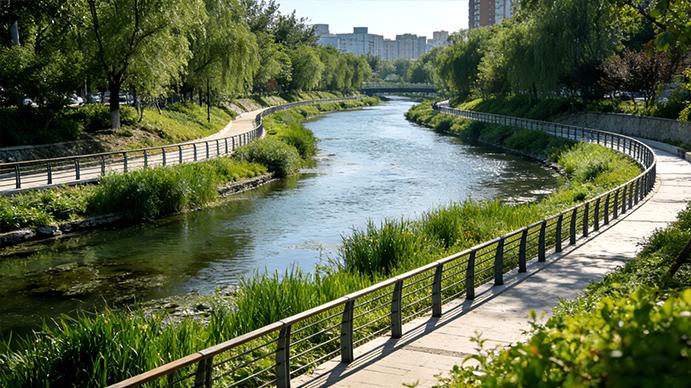
The practice, commonly called river or stream daylighting, involves uncovering waterways that have been placed underground or enclosed in artificial channels. Depending on the site, restoration can reconnect a stream with its surroundings, create public green space and improve habitat.
It is not simply a matter of removing a concrete roof and allowing water to flow.
Successful projects require careful engineering, flood planning, pollution control, land-use decisions and public investment. They also raise a difficult question: in cities where space is limited and infrastructure is already deeply established, how much of the natural landscape can realistically be restored?
Why Cities Buried Their Rivers in the First Place
The disappearance of urban streams was often connected to the rapid expansion of industrial cities.
As populations increased, waterways became integrated into systems of drainage, transportation and industrial production. Streams were modified, straightened or covered to make room for development.
In some places, polluted watercourses became associated with public health concerns. Enclosing them offered a way to separate unpleasant or contaminated water from everyday urban life.
The engineering logic was understandable within the priorities of the time.
A covered stream could provide additional space for streets, buildings and utilities. Underground channels also helped move water away from developed areas without requiring open corridors through valuable land.
But this approach frequently changed how urban landscapes functioned.
Natural streams contain bends, shallow areas, vegetation and connections to surrounding soils. When they are straightened and enclosed, many of these features disappear.
The water still moves, but the ecosystem around it becomes less visible and often less complex.
In some cities, buried waterways were eventually incorporated into stormwater drainage networks, making them difficult to distinguish from conventional infrastructure.
Decades later, urban planners are reassessing whether the complete separation of cities from their natural waterways was always the best long-term solution.
What Does River Daylighting Actually Involve?
Daylighting is not one standard construction method.
A project may involve removing a concrete covering, relocating underground infrastructure, restoring a stream channel or creating a more natural route through an urban area.
The design depends on what remains of the original watercourse and how much space is available.
In a relatively undeveloped area, restoration may be able to recreate bends, shallow banks and natural vegetation.
In a dense city center, a project may have to work within a narrow corridor surrounded by existing buildings, roads and utilities.
Engineers first need to understand the water system.
Where does the water originate? How much rainfall enters the catchment? How does the stream behave during extreme storms? Are there contamination risks in the soil or sediment? What infrastructure currently crosses the route?
These questions matter because uncovering a stream without understanding its hydrology can create new problems.
A waterway that appears small during ordinary weather may carry a substantial volume of water during intense rainfall.
The restored channel must therefore be designed for more than its most attractive conditions.
Seoul’s Cheonggyecheon: A Landmark Transformation
One of the best-known examples of urban stream daylighting is Cheonggyecheon in Seoul, South Korea.
For decades, the waterway was covered by urban infrastructure, including a major elevated road. The corridor had become part of the city’s transport and commercial landscape.
A major restoration project, completed in 2005, removed the elevated highway structure and reopened more than six kilometers of the stream corridor.
The result was a public urban space featuring flowing water, pedestrian routes, bridges and landscaped areas.
Cheonggyecheon became internationally recognized as an example of how an urban infrastructure corridor could be transformed into a public landscape.
The project also influenced discussions about the relationship between transport planning, urban design and environmental restoration.
However, it is important to understand what the project did and did not achieve.
The restored stream is supported by an engineered water-management system, including pumped water. Its present condition is not simply the return of an untouched natural river.
This distinction does not diminish the project’s significance. It makes the case study more useful.
Cheonggyecheon demonstrates that urban restoration can create valuable public space and alter how residents experience a city, but it also shows that a visually natural waterway may depend on substantial technical infrastructure.
Zurich Took a Different Approach
Not every restoration project requires the removal of a major highway.
Zurich, Switzerland, provides an example of a more distributed approach to stream restoration.
The city’s Bächkonzept program has focused on reopening smaller sections of buried or modified streams over time.
Rather than concentrating on one dramatic central project, the approach involves restoring multiple watercourses across the urban landscape.
A comparative study published online in 2025 examined Seoul’s Cheonggyecheon and Zurich’s Bächkonzept. It analyzed how two very different approaches to stream daylighting can produce broader changes in urban adaptation.
The research highlighted that both large-scale and smaller, incremental interventions can be transformative, even though their costs, timelines and physical forms differ.
This is an important lesson for cities that cannot afford or accommodate a single major restoration project.
A network of smaller waterways may offer a practical alternative to rebuilding one large river corridor.
It also allows restoration to become part of routine urban planning rather than an exceptional redevelopment project.
Can Uncovering Rivers Help Prevent Urban Flooding?
One of the strongest arguments for restoring urban waterways is their potential contribution to stormwater management.
Traditional drainage systems are often designed to move rainfall away from developed areas as quickly as possible.
This can be effective under certain conditions, but intense rainfall can overwhelm pipes and channels, particularly when surrounding land is heavily paved.
Restored streams can sometimes provide additional space for water to move, spread and interact with surrounding vegetation and soils.
Wider channels, natural banks, floodable areas and connected wetlands may help slow runoff and create temporary water storage.
However, the benefits depend heavily on the design.
A narrow decorative channel with hard concrete edges may offer little additional flood-storage capacity. A properly designed floodplain connection can perform very differently.
Urban stream daylighting should therefore be considered alongside broader stormwater measures such as permeable surfaces, rain gardens, wetlands, green roofs and improved drainage infrastructure.
A 2025 review of green infrastructure and urban flooding examined how different interventions influence flood management and highlighted the importance of combining infrastructure, modelling and site-specific planning.
No single restoration technique can eliminate urban flood risk.
In some locations, underground drainage will remain essential, particularly where space is limited or the watercourse must carry large volumes of stormwater.
The goal should be to create a more resilient overall system, not to assume that every buried stream can safely be reopened.
Nature Returns When Waterways Become More Connected
A natural stream is more than a channel carrying water.
It can provide habitat, support movement between ecological areas and create conditions for plants and animals that cannot thrive in heavily modified drainage systems.
When an urban waterway is restored, vegetation may return along its banks. Insects, birds and other wildlife may use the new habitat, particularly when the restored corridor connects to parks or other green spaces.
The surrounding landscape matters.
A short restored stream isolated between roads and buildings may provide a limited ecological benefit. A connected waterway that links several habitats can have a much wider influence.
The 2025 United Nations Convention to Combat Desertification and Convention on Migratory Species report on ecological connectivity emphasizes that restoring natural connections between habitats and water systems can support biodiversity and ecosystem functions.
In urban environments, this means that the value of a stream may extend beyond the water itself.
Its banks, surrounding vegetation and links to other green areas can contribute to a larger ecological network.
Still, restoration does not automatically recreate the original ecosystem. Pollution, invasive species, altered temperatures and restricted space can limit what returns.
The best outcomes generally require long-term ecological monitoring rather than assuming that the presence of visible water is proof of successful restoration.
The Cooling Effect: A More Comfortable Urban Landscape
Urban waterways can also influence how people experience heat.
Cities often contain extensive surfaces made from asphalt, concrete and other materials that absorb and release heat.
Green spaces and water features can create more comfortable local environments, although the scale of their influence varies.
Trees provide shade. Vegetation can support evapotranspiration. Water bodies can affect local humidity and temperature through heat exchange and evaporation.
A restored stream combined with trees, planted banks and accessible green space may therefore contribute to a more comfortable public environment.
But the cooling effect should not be exaggerated.
A narrow water channel cannot reverse the urban heat-island effect across an entire city. Its influence depends on the size of the corridor, surrounding building density, vegetation, wind and local climate.
The greatest benefits may come from treating water restoration as part of a larger blue-green network rather than as an isolated landscaping project.
This approach can also make restored waterways more useful to residents, providing shaded walking routes, places to rest and opportunities to experience nature within dense neighborhoods.
Why Some Rivers Should Remain Underground
Despite the appeal of daylighting, uncovering every buried waterway is neither realistic nor necessarily environmentally responsible.
Some streams run through areas with contaminated soil or sediments. Excavating them without appropriate remediation could expose pollutants and create additional risks.
Other waterways carry combined stormwater and wastewater flows, making restoration technically difficult without first upgrading sanitation systems.
In heavily developed districts, underground routes may also be essential for roads, buildings, utilities and flood management.
There may be insufficient land to create a safe open channel with enough capacity for extreme rainfall.
These constraints should not be treated as failures of environmental ambition. They are practical realities that determine whether a project can succeed.
Some cities may achieve better outcomes by improving underground water quality, creating accessible sections of the stream, restoring downstream habitats or developing alternative green infrastructure.
A responsible restoration strategy begins with the condition of the water system, not with an attractive architectural rendering.
The Social Question: Who Benefits From a Restored River?
There is another issue that deserves attention: the effect of environmental improvements on the people who already live nearby.
A restored waterway can make a district more attractive. New public spaces may increase tourism, encourage local businesses and improve the everyday experience of residents.
But improvements to public space can also increase property values and commercial pressure.
In some circumstances, long-term residents may find themselves facing higher housing costs or changing neighborhood conditions.
This raises questions about environmental justice.
If a restoration project improves an area but makes it less affordable for the people who lived there before, its social benefits may be unevenly distributed.
Public access, affordable housing policies, community participation and transparent planning can help address these concerns.
Residents should be involved before major design decisions are finalized, particularly when projects require road changes, land acquisition or the relocation of existing infrastructure.
A successful urban restoration project should improve the relationship between people and nature without ignoring the communities most directly affected by the transformation.
What Cities Can Learn From These Projects
The experience of Seoul and Zurich suggests that there is no single model for bringing buried rivers back into public view.
Large-scale restoration can reshape the identity of a central urban district. Smaller interventions can gradually rebuild ecological connections across an entire city.
Both approaches require more than construction.
Cities need reliable hydrological information, environmental assessments, long-term maintenance plans and realistic funding.
They also need to consider what happens during extreme weather, how restored waterways connect with existing drainage systems and whether local communities can access the resulting public spaces.
For some locations, daylighting will be the right solution. For others, improving the underground system or restoring adjacent green areas may be more effective.
The important change is not that every city must uncover its rivers.
It is that urban planners are increasingly reconsidering waterways as living parts of the city rather than treating them exclusively as drainage infrastructure.
The Future of Cities May Depend on What They Choose to Reveal
A buried stream is easy to forget.
Once covered by roads and buildings, it disappears from the visible landscape. Yet its water may continue moving beneath the places where people live and work.
Bringing these waterways back into daylight can create opportunities for ecological restoration, public space and more integrated approaches to urban water management.
The process is rarely simple. Engineering limitations, pollution, land costs and competing public needs can make some projects impractical.
But the larger idea is worth considering.
Cities are not separate from nature. They are built within landscapes shaped by water, soil, climate and living systems.
The future of urban planning may depend partly on recognizing those relationships again.
Sometimes, improving a city does not mean building something entirely new. It means uncovering a natural system that was there all along.
Sources and Further Reading
-
Khirfan, L. (2025, published online). “Urban stream daylighting as a nature-based solution: transformative or incremental? A scaffolded review of Seoul’s Cheonggyecheon and Zürich’s Bächkonzept.” Journal of Environmental Planning and Management. https://doi.org/10.1080/09640568.2025.2526614
-
United Nations Convention to Combat Desertification and Convention on Migratory Species. (2025). Global Land Outlook: Thematic Report on Ecological Connectivity and Land Restoration. https://www.unccd.int/resources/global-land-outlook/overview
-
Ali, L., Gato-Trinidad, S. & Imteaz, M. (2025). “Green Infrastructure and Urban Flooding: A Survey of Prevailing Issues and Current Modelling Approaches.” Water Resources Management, 39, 3697"3714. https://doi.org/10.1007/s11269-025-04125-6
-
Wang, S. & Bi, X. (2025). “Integrative strategies for urban flood resilience and risk: A meta-analysis of policy, infrastructural, and ecosystem-based interventions.” Physics and Chemistry of the Earth, 141, 104077. https://doi.org/10.1016/j.pce.2025.104077
-
United Nations Convention to Combat Desertification. Global Land Outlook: Ecological Connectivity and Land Restoration. https://www.unccd.int/sites/default/files/2025-10/GLO%20Ecological%20Connectivity%20full.pdf
Image Credit
Photo by Vitali Adutskevich, via Pexels. Free under the Pexels License. https://www.pexels.com/photo/river-and-promenade-in-park-16284852/