Nelson Mandela: Leadership, Forgiveness, and the Art of Reconciliation
How Nelson Mandela's 27 years in prison shaped a leadership philosophy built on forgiveness, reconciliation, and nation-building ” and what modern leaders can still learn from it.
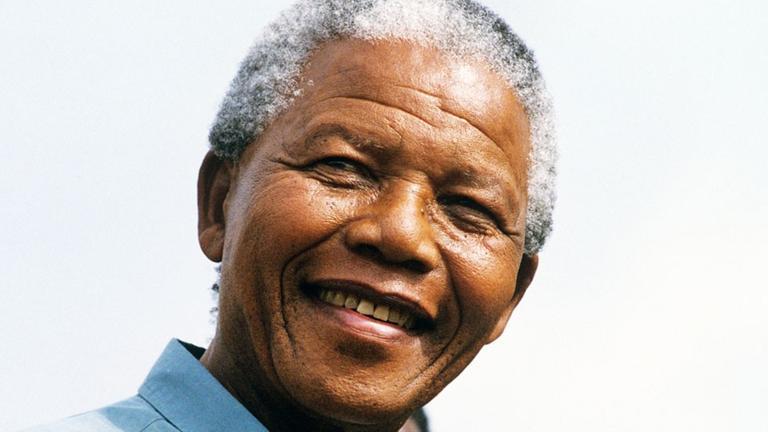
Nelson Mandela: Leadership, Forgiveness, and the Art of Reconciliation
When Nelson Mandela walked out of Victor Verster Prison on February 11, 1990, after 27 years of incarceration, the world expected anger. Instead, they found a man who spoke of forgiveness, of healing, and of building a nation that included his former jailers. That moment did not just end apartheid " it redefined what leadership could mean in the modern era.
Mandela’s life offers more than a historical footnote. It presents a tested framework for how leaders can move from conflict to cooperation, how personal conviction can survive institutional oppression, and how forgiveness can function not as weakness but as the hardest form of strength.
The Formation of a Leader: Early Life and Political Awakening
Born Rolihlahla Mandela on July 18, 1918, in the village of Mvezo in South Africa’s Eastern Cape, Mandela was the first in his family to attend school. A teacher gave him the English name “Nelson,” a common colonial practice at the time. He later studied law at the University of the Witwatersrand, where he first encountered the organized resistance to racial segregation that would define his life.
The National Party’s victory in 1948 formalized apartheid " a system of institutionalized racial segregation that stripped Black South Africans of basic rights. Mandela joined the African National Congress (ANC) in 1944 and helped found its Youth League in 1944, advocating for more assertive resistance against the regime.
By the early 1960s, peaceful protest had been met with increasing state violence. The Sharpeville Massacre of 1960, in which police killed 69 unarmed protesters, convinced Mandela that nonviolence alone could not dismantle apartheid. He co-founded Umkhonto we Sizwe (Spear of the Nation), the ANC’s armed wing, and was arrested in 1962.
The Prison Years: 27 Years That Forged a Philosophy
Mandela was sentenced to life imprisonment in 1964 during the Rivonia Trial. His statement from the dock " “I have fought against white domination, and I have fought against black domination. I have cherished the ideal of a democratic and free society in which all persons live together in harmony and with equal opportunities” " became one of the defining political declarations of the 20th century.
He spent 18 of his 27 years on Robben Island, a limestone quarry off Cape Town. Prisoners broke rocks in the sun, slept on thin mats on concrete floors, and communicated through smuggled notes. Mandela was confined to a cell barely larger than a closet.
What happened during those decades matters as much as what happened after. Mandela used his imprisonment to study his oppressors. He learned Afrikaans, the language of his jailers. He read their history, their literature, their fears. He understood that to negotiate with power, one must first understand it.
More remarkably, he refused to let bitterness define him. He later wrote that as he walked toward the gate of the prison, he knew that if he carried hatred with him, he would still be a prisoner. That decision " to leave resentment behind " became the foundation of his leadership after release.
From Prisoner to President: The Negotiation of Peace
Mandela’s release in 1990 did not immediately end apartheid. South Africa remained deeply divided, with violence between political factions and the ever-present threat of civil war. Mandela faced pressure from his own supporters to demand unconditional surrender from the white minority government, and from white South Africans who feared Black majority rule would mean retribution.
He chose a third path: negotiation.
Mandela engaged directly with President F.W. de Klerk, the architect of apartheid’s dismantling. He met with white business leaders, military commanders, and former security police. He listened. He acknowledged their fears even as he demanded their surrender of power.
This approach was not universally popular within the ANC. Some viewed it as compromise; others as betrayal. Mandela understood that no single group could build a new South Africa alone. The transition required the participation of those who had benefited from the old system.
In 1994, South Africa held its first democratic elections. Mandela became the country’s first Black president. He served one term, stepping down in 1999 " a deliberate choice to demonstrate that leadership is not about holding power but about preparing others to hold it.
The Truth and Reconciliation Commission: Forgiveness as Public Policy
Perhaps Mandela’s most enduring innovation was the Truth and Reconciliation Commission (TRC), chaired by Archbishop Desmond Tutu. Rather than the Nuremberg-style trials that punished perpetrators after World War II, or the blanket amnesty that ignores crimes, South Africa created a middle path.
Perpetrators of political crimes could apply for amnesty if they fully disclosed their actions. Victims could tell their stories publicly. The process prioritized truth over punishment, and restoration over retribution.
It was imperfect. Many victims felt amnesty was too lenient. Many perpetrators never came forward. But the TRC established a principle that would influence post-conflict societies worldwide: a society can only move forward if it first agrees on what happened.
Mandela’s role was crucial. He did not order the TRC; he supported it from a distance, allowing Tutu and the commissioners to work independently. He understood that reconciliation cannot be commanded from above " it must be invited from below.
What Modern Leaders Can Learn
Mandela’s legacy is not a blueprint to copy but a set of questions to ask:
1. Can you understand your opponent without becoming them? Mandela studied apartheid’s architects not to imitate them but to negotiate with them effectively. Empathy is not agreement; it is strategic clarity.
2. Is forgiveness a strategy or a sentiment? For Mandela, forgiveness was practical. Holding onto anger would have made him ineffective as a leader. Forgiveness freed him to act.
3. Can you build institutions that outlast you? Mandela served one term and stepped down voluntarily. His greatest achievement may not be what he did in office but what he refused to do: hold onto power.
4. Can you hold complexity without collapsing into simplicity? Mandela was simultaneously a revolutionary and a statesman, a prisoner and a president, a symbol and a politician. He refused to reduce himself to any single identity.
The Relevance Today
In an era of polarized politics, where compromise is often treated as betrayal and forgiveness as weakness, Mandela’s example remains challenging. He demonstrates that leadership is not about being right but about being useful " to your people, to your opponents, and to the future.
Mandela died on December 5, 2013, at the age of 95. South Africa still faces enormous challenges " inequality, corruption, violence. But the question he posed to his country and to the world remains unanswered and urgent: Can we build something new without first destroying each other?
Frequently Asked Questions
What was Nelson Mandela’s role in ending apartheid? Mandela led the African National Congress’s resistance to apartheid, spent 27 years in prison, negotiated with the apartheid government after his release, and became South Africa’s first democratically elected president in 1994.
Why did Nelson Mandela choose forgiveness over revenge? Mandela believed that hatred would keep him psychologically imprisoned even after physical release. He viewed forgiveness as a strategic necessity for nation-building, not merely a personal sentiment.
How long was Nelson Mandela in prison? Mandela was imprisoned for 27 years, from 1962 to 1990, primarily on Robben Island.
What is the Truth and Reconciliation Commission? The TRC was a South African commission chaired by Desmond Tutu that granted amnesty to perpetrators of politically motivated crimes in exchange for full disclosure, prioritizing truth-telling over punishment.
What leadership lessons can be learned from Nelson Mandela? Key lessons include strategic empathy, forgiveness as practical statecraft, voluntary transfer of power, and the ability to hold complexity without ideological rigidity.