Marie Curie: Science, Persistence, and the Cost of Discovery
Marie Curie's pioneering work on radioactivity reshaped physics and chemistry, but her legacy extends beyond two Nobel Prizes to a model of scientific persistence in the face of institutional barriers.
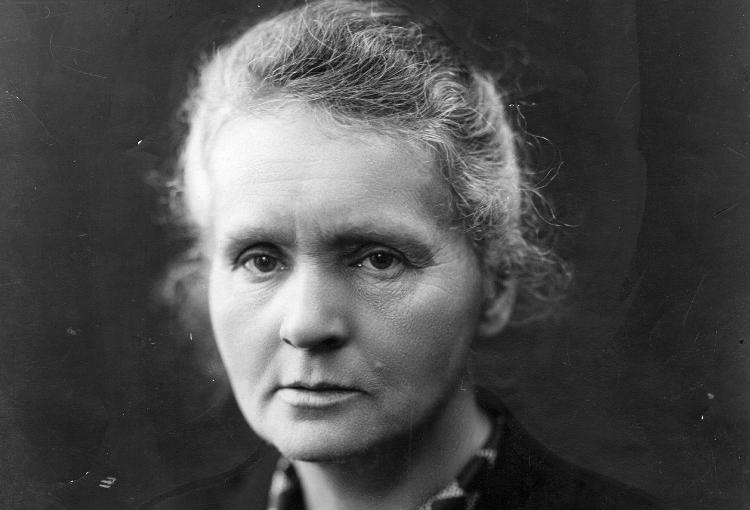
Marie Curie: Science, Persistence, and the Cost of Discovery
Marie Curie stands apart in the history of science not only because of what she discovered but because of how she persisted. She was the first woman to win a Nobel Prize, the first person to win two Nobel Prizes in different scientific fields, and the only person to win Nobel Prizes in both physics and chemistry. Her research on radioactivity " a term she coined " laid the foundation for modern nuclear physics, cancer treatment, and our understanding of the atom.
Yet her story is also one of obstacles: a woman excluded from formal university education in her native Poland, a researcher working in a shed, a widow who continued her husband’s work while raising two daughters, and a scientist whose own discovery ultimately contributed to her death.
Early Life: Education Against the Odds
Maria Sklodowska was born on November 7, 1867, in Warsaw, then part of the Russian Empire. Her parents were teachers, and her father taught physics and mathematics. But Poland under Russian rule restricted higher education for women, and Warsaw’s universities were closed to her.
Maria attended an underground institution known as the Flying University, a clandestine organization that educated Polish youth, including women, in defiance of Russian authorities. She worked as a governess for years, saving money to fund her sister’s education in Paris, with the understanding that her sister would later support her own studies.
In 1891, at age 24, Maria arrived in Paris and enrolled at the Sorbonne. She adopted the French name “Marie.” She lived in a cold, sparsely furnished room, often studying late into the night with little food. She earned degrees in physics (1893) and mathematics (1894), ranking first in her class in physics.
Meeting Pierre Curie: A Partnership of Equals
In 1894, Marie needed laboratory space for her research on the magnetic properties of steels. A Polish physicist introduced her to Pierre Curie, a professor at the School of Industrial Physics and Chemistry. Pierre was an accomplished scientist who had already discovered piezoelectricity with his brother Jacques.
Their partnership was unusual for its time. They treated each other as intellectual equals in an era when women scientists were typically relegated to assistant roles. They married in 1895, and their wedding gift to each other was bicycles, which they used for long rides through the French countryside.
Marie’s doctoral research focused on uranium rays, recently discovered by Henri Becquerel. She found that the rays were not dependent on the uranium’s chemical form " pure uranium and uranium compounds emitted radiation equally. This suggested the radiation came from the atom itself, a revolutionary idea that challenged the prevailing view of the atom as indivisible.
She coined the term “radioactivity” to describe this phenomenon. Working with Pierre, she discovered two new elements: polonium (named after her native Poland) and radium.
The Shed and the Struggle
To isolate radium, the Curies needed tons of pitchblende, a uranium-rich ore. They processed it in a shed behind the school " a drafty, unheated building with a leaky roof. They stirred vats of boiling ore with iron rods, their hands cracked from acid, their clothes stained with chemical residue.
It took four years to isolate one-tenth of a gram of radium chloride. They refused to patent their process, believing scientific discoveries should belong to humanity. Marie later said, “Radium is not going to enrich anyone. It is an element, it belongs to all people.”
In 1903, Marie, Pierre, and Henri Becquerel shared the Nobel Prize in Physics for their work on radioactivity. Marie was the first woman to receive a Nobel Prize. The award brought financial relief but also public scrutiny " as a woman in science, she was constantly tested, questioned, and underestimated.
Loss and Continuation
Pierre Curie died in 1906, struck by a horse-drawn cart while crossing a street in Paris. Marie was devastated, but she did not abandon her work. She took over Pierre’s teaching position at the Sorbonne, becoming the institution’s first female professor.
In 1911, she won her second Nobel Prize, this time in Chemistry, for the discovery of radium and polonium and her investigation of radium’s properties. She remains the only person to win Nobel Prizes in two different scientific disciplines.
The second prize came amid scandal. A French newspaper exposed Marie’s relationship with Paul Langevin, a married former student of Pierre’s. The press vilified her as a foreigner who had broken up a home. Marie stood firm, continuing her research despite public hostility.
World War I and Mobile Radiology
When World War I broke out in 1914, Marie applied her scientific knowledge to a humanitarian problem: battlefield surgeons needed X-rays to locate bullets and shrapnel, but X-ray machines were confined to hospitals far from the front.
Marie trained herself as a radiologist, learned to drive, and raised funds to equip vans with X-ray generators. These “Little Curies” " mobile radiology units " traveled to the front lines, where Marie and her daughter Irène (then a teenager) operated the equipment and trained other technicians. It is estimated that over a million wounded soldiers were examined using these units.
She also donated her Nobel Prize medals to the war effort, offering to have them melted down for gold when France needed funds. The government declined, but the gesture symbolized her commitment to her adopted country.
The Cost of Discovery
Marie Curie died on July 4, 1934, at age 66, from aplastic anemia " a blood disorder linked to prolonged radiation exposure. She carried test tubes of radium in her pockets, kept samples in her desk, and worked without the protective equipment that would be standard today. The dangers of radioactivity were not yet understood.
Her notebooks remain radioactive. They are stored in lead-lined boxes at France’s Bibliothèque nationale, and researchers who wish to consult them must sign a liability waiver.
Her legacy extends beyond her own discoveries. Her daughter Irène Joliot-Curie won a Nobel Prize in Chemistry in 1935 for artificial radioactivity. Her granddaughter Hélène Langevin-Joliot became a distinguished nuclear physicist. Marie proved that a woman could not only participate in science but lead it.
Why Marie Curie Still Matters
Curie’s relevance is not confined to history. She represents:
Persistence through exclusion. She was denied formal education in Poland, worked without proper laboratory facilities, and faced gender-based hostility throughout her career. She persisted anyway.
Science as public good. By refusing to patent radium isolation, she prioritized human benefit over personal profit " a stance rare in today’s commercialized research environment.
Courage in the face of the unknown. She worked with a force " radioactivity " that no one understood, that no one could see or feel, and that eventually killed her. She advanced human knowledge at personal cost.
Frequently Asked Questions
What did Marie Curie discover? Marie Curie discovered the elements polonium and radium, coined the term “radioactivity,” and pioneered research into the properties of radioactive elements.
How many Nobel Prizes did Marie Curie win? Two " the Nobel Prize in Physics (1903, shared with Pierre Curie and Henri Becquerel) and the Nobel Prize in Chemistry (1911).
What is Marie Curie’s connection to X-ray technology? During World War I, Marie Curie developed mobile X-ray units (“Little Curies”) to help battlefield surgeons locate bullets and shrapnel, training technicians and operating equipment near the front lines.
Why are Marie Curie’s notebooks still radioactive? Curie worked with radium and other radioactive materials without modern protective equipment. Her papers and personal belongings remain contaminated with radiation and are stored in lead-lined containers.
Was Marie Curie the first woman to win a Nobel Prize? Yes. She won the Nobel Prize in Physics in 1903, becoming the first woman to receive a Nobel Prize in any category.