The High Seas Treaty Is Now in Force. Can the World Finally Protect the Ocean Beyond Its Borders?
The High Seas Treaty Is Now in Force. Can the World Finally Protect the Ocean Beyond Its Borders?
Somewhere far from the nearest coastline, a fishing vessel crosses an expanse of open water. Beneath it, marine animals move through an ecosystem that may never be seen by the people making decisions about its future. There are no national flags marking the boundaries of the water, no coastal authorities managing the entire ecosystem and no simple way for one country to protect it alone.
For much of modern history, this has been one of the central problems of ocean conservation.
The high seas cover a vast part of the planet, yet the rules governing human activities in these waters have developed through a complicated collection of international agreements, regional arrangements and sector-specific institutions. Conservation measures have often struggled to keep pace with the scale of the environment they are meant to protect.
That situation entered a new phase on January 17, 2026.
On that date, the Biodiversity Beyond National Jurisdiction Agreement, widely known as the High Seas Treaty, officially entered into force. Negotiated under the United Nations Convention on the Law of the Sea, the agreement establishes a legally binding framework for conserving and sustainably using marine biodiversity in areas beyond national jurisdiction.
Its arrival is a major development in international environmental law. But a treaty becoming legally effective is not the same as an ocean becoming protected.
The more difficult work is now beginning: turning international commitments into decisions, scientific cooperation, protected areas and meaningful changes in how people use the ocean.
Why the High Seas Have Been So Difficult to Protect
The ocean does not follow political borders.
Fish migrate across enormous distances. Marine mammals travel between feeding and breeding grounds. Currents transport nutrients, heat and pollution across regions. A species that appears abundant in one location may depend on habitats thousands of kilometers away.
National governments can regulate activities within their own maritime zones, subject to international law. But waters beyond national jurisdiction present a different challenge.
The high seas are generally the waters beyond a country’s exclusive economic zone, which can extend up to 200 nautical miles from its coastal baselines. They are not owned by any single state, although activities within them remain subject to international legal rules.
The international seabed Area beyond national jurisdiction is also governed by a separate legal framework under the Law of the Sea Convention.
Before the BBNJ Agreement, important international rules already existed. The International Maritime Organization regulates aspects of shipping, regional fisheries management organizations oversee certain fishing activities, and other agreements address particular species and conservation issues.
The problem was not a complete absence of international law. It was the difficulty of coordinating different systems across an interconnected marine environment.
A fishing authority, a shipping regulator and a conservation organization may operate under different mandates, scientific processes and geographic responsibilities.
The High Seas Treaty is designed to provide a more coordinated framework for marine biodiversity conservation without replacing the existing legal institutions that already govern particular activities.
That distinction is essential to understanding what the agreement can realistically achieve.
What the High Seas Treaty Actually Changes
The agreement focuses on four major areas.
1. Marine protected areas beyond national borders
One of its most significant contributions is the framework for establishing area-based management tools, including marine protected areas in areas beyond national jurisdiction.
Marine protected areas can restrict or manage activities in specific locations to conserve habitats and species.
But creating one in international waters is more complicated than drawing a boundary on a map. Scientists need to identify ecologically important locations, governments must consider proposed measures and the international process must coordinate with relevant existing organizations.
The treaty establishes procedures for developing and implementing these measures.
It does not automatically designate the entire high seas as a protected area, nor does its entry into force immediately close large areas of ocean to fishing or shipping.
The real test will be whether countries can agree on meaningful protection where scientific evidence shows that it is needed.
2. Environmental impact assessments
The treaty also establishes procedures for assessing the potential environmental consequences of planned activities in areas beyond national jurisdiction.
This matters because an activity can create environmental effects that extend beyond the location where it takes place.
Underwater noise, habitat disturbance, pollution and changes to marine ecosystems can have consequences that are difficult to reverse.
Environmental impact assessments are intended to improve the information available before activities with potentially significant effects proceed.
They do not mean that every activity will automatically be prohibited. Instead, they create a more structured process for identifying risks, evaluating alternatives and considering possible environmental consequences.
The quality of the scientific evidence and the transparency of the assessment process will be critical.
3. Marine genetic resources and fair benefit-sharing
The deep ocean contains organisms with biological characteristics that may be valuable for scientific research, medicine, biotechnology and other applications.
Marine genetic resources include biological material from marine organisms that can be studied for their genetic and biochemical properties.
Access to these resources raises an important question: who benefits when discoveries are made using biodiversity found beyond national borders?
The treaty addresses the sharing of benefits from marine genetic resources, including monetary and non-monetary forms of benefit-sharing.
Non-monetary benefits can include access to scientific data, research collaboration, training and the transfer of technology.
This issue is particularly important for countries with limited marine research infrastructure.
A scientific discovery may depend on expensive vessels, advanced laboratories and specialized equipment. Without cooperation, many countries may remain excluded from the research and knowledge generated in international waters.
Fairer access to scientific information and research capacity is therefore not simply a diplomatic concern. It is part of the broader question of who gets to participate in the future ocean economy.
4. Capacity-building and technology transfer
The fourth major area addresses differences in scientific and technical capabilities between countries.
Monitoring the high seas requires ships, underwater instruments, satellite observations, data systems and trained researchers.
Not every country has equal access to these resources.
The agreement provides a framework for capacity-building and the transfer of marine technology, with the aim of making international cooperation more inclusive.
Without these capabilities, countries may formally participate in conservation discussions but struggle to contribute to scientific assessments, monitoring and implementation.
A successful agreement must therefore make participation meaningful, not merely symbolic.
The Numbers Behind the Agreement
The treaty’s legal progress is already measurable.
The United Nations Treaty Collection recorded 105 parties and 145 signatories as of November 16, 2026. The agreement entered into force on January 17, 2026, after the required number of ratifications was reached.
These figures show substantial international participation, although they do not mean that every country has joined.
The agreement also has an institutional process ahead.
The first Conference of the Parties, known as COP1, is scheduled for January 11"22, 2027, at United Nations Headquarters in New York.
This meeting will be important because the treaty needs functioning institutions, procedures and priorities to move from legal commitments toward practical implementation.
The negotiations that created the agreement were difficult. The work of making it effective across different political, economic and scientific interests may be equally demanding.
Why the Treaty Matters to People Who Never Visit the High Seas
It is easy to think of international waters as a remote issue that matters mainly to scientists, governments and commercial shipping companies.
But the health of the open ocean is connected to everyday life in ways that are not always visible.
Marine ecosystems contribute to global food systems, support fisheries and influence natural processes that help regulate the planet’s climate.
Coastal communities may depend on fish populations that move through international waters. Marine species that travel across multiple jurisdictions cannot be protected effectively if conservation stops at national boundaries.
The consequences of marine biodiversity loss are therefore not confined to distant ecosystems.
They can affect food security, livelihoods, scientific discovery and the resilience of communities connected to the sea.
There is also a human question behind the treaty: should the benefits of an ecosystem that belongs to no single country be accessible only to those with the greatest financial and technological resources?
That question is central to the agreement’s benefit-sharing and capacity-building provisions.
Protecting biodiversity is important, but so is ensuring that the process does not deepen existing inequalities between nations.
The Difficult Questions That Remain
The treaty is an important legal milestone, but it cannot solve every problem facing the ocean.
Some of the most difficult challenges involve enforcement and coordination.
A protected area is only effective if activities within it can be monitored and rules can be implemented. International waters are vast, and monitoring them requires cooperation, reliable information and resources.
There is also the challenge of working with existing international organizations.
Fishing, shipping, seabed activities and marine conservation are already addressed through different legal frameworks. The new agreement must coordinate with these systems while respecting their respective mandates.
Scientific uncertainty presents another difficulty.
The deep ocean remains less understood than many terrestrial environments. Researchers continue to discover species, investigate ecological relationships and examine how marine systems respond to environmental change.
Decision-makers must therefore balance precaution with the need for reliable scientific evidence.
There is no single enforcement mechanism that can instantly resolve all these problems. The treaty creates procedures and institutions, but implementation will depend on the willingness and capacity of participating states.
Türkiye and the High Seas Agreement
Türkiye is also part of this international development.
According to the United Nations Treaty Collection, Türkiye signed the agreement on September 27, 2024, and deposited its instrument of ratification on January 16, 2026, one day before the treaty entered into force.
This makes the agreement relevant to Türkiye’s participation in international ocean governance, scientific cooperation and marine biodiversity discussions.
Although Türkiye’s most immediate maritime interests are connected to its surrounding seas, international ocean governance has broader implications for research, environmental diplomacy and cooperation.
The treaty’s implementation will provide opportunities for countries to contribute to marine science and international conservation discussions, including through capacity-building and shared knowledge.
The Next Test: Turning an International Agreement Into Real Protection
The first Conference of the Parties in January 2027 will be an important step in the treaty’s development.
Countries will need to advance the institutional arrangements and procedures required to make the agreement operational. The quality of those decisions will influence how quickly the framework can support practical conservation measures.
The process will also reveal how effectively governments can cooperate when economic interests, scientific priorities and environmental responsibilities intersect.
For conservation organizations and marine researchers, the treaty offers a new international framework. For governments, it creates obligations and opportunities. For communities that depend on marine resources, its success may influence the long-term sustainability of the ecosystems connected to their livelihoods.
But the agreement should not be judged only by the number of countries that have joined it or the meetings held under its authority.
Its lasting value will depend on what happens in the water.
Are important habitats identified and protected? Are environmental risks assessed before damage occurs? Are scientific resources shared more fairly? Can countries with fewer resources participate meaningfully? Are conservation decisions monitored and respected?
These are the questions that will determine whether the treaty becomes more than a diplomatic achievement.
Protecting the Ocean Is a Shared Responsibility
The high seas have always presented a difficult paradox.
They are beyond the direct control of individual coastal governments, yet their health is connected to the lives of people everywhere.
The entry into force of the BBNJ Agreement does not mean that this challenge has been solved. It means the international community now has a stronger legal framework with which to address it.
That is a meaningful beginning.
The ocean is too large for any single country to protect alone, and its ecosystems are too interconnected for conservation to stop at political boundaries.
The treaty’s greatest promise may therefore be larger than the creation of protected areas or new scientific procedures. It is the recognition that a shared natural system requires shared responsibility.
Whether that recognition changes the future of the ocean will depend on the decisions made long after the headlines have moved on.
Sources and Further Reading
-
United Nations " BBNJ Agreement: Official treaty information, implementation and COP1 documents. https://www.un.org/bbnjagreement/en
-
United Nations Treaty Collection " Status of the BBNJ Agreement. Status checked November 16, 2026. https://treaties.un.org/PAGES/ViewDetails.aspx?chapter=21&clang=_en&mtdsg_no=XXI-10&src=IND
-
United Nations Environment Programme " Background on the BBNJ Agreement. https://www.unep.org/en/unep-and-bbnj/background
-
Food and Agriculture Organization of the United Nations " BBNJ Agreement implementation support. https://www.fao.org/in-action/bbnj-implementation/about/en
-
UNESCO Intergovernmental Oceanographic Commission " A historic milestone for ocean governance. https://www.ioc.unesco.org/en/articles/bbnj-treaty-enters-force
Image Credit
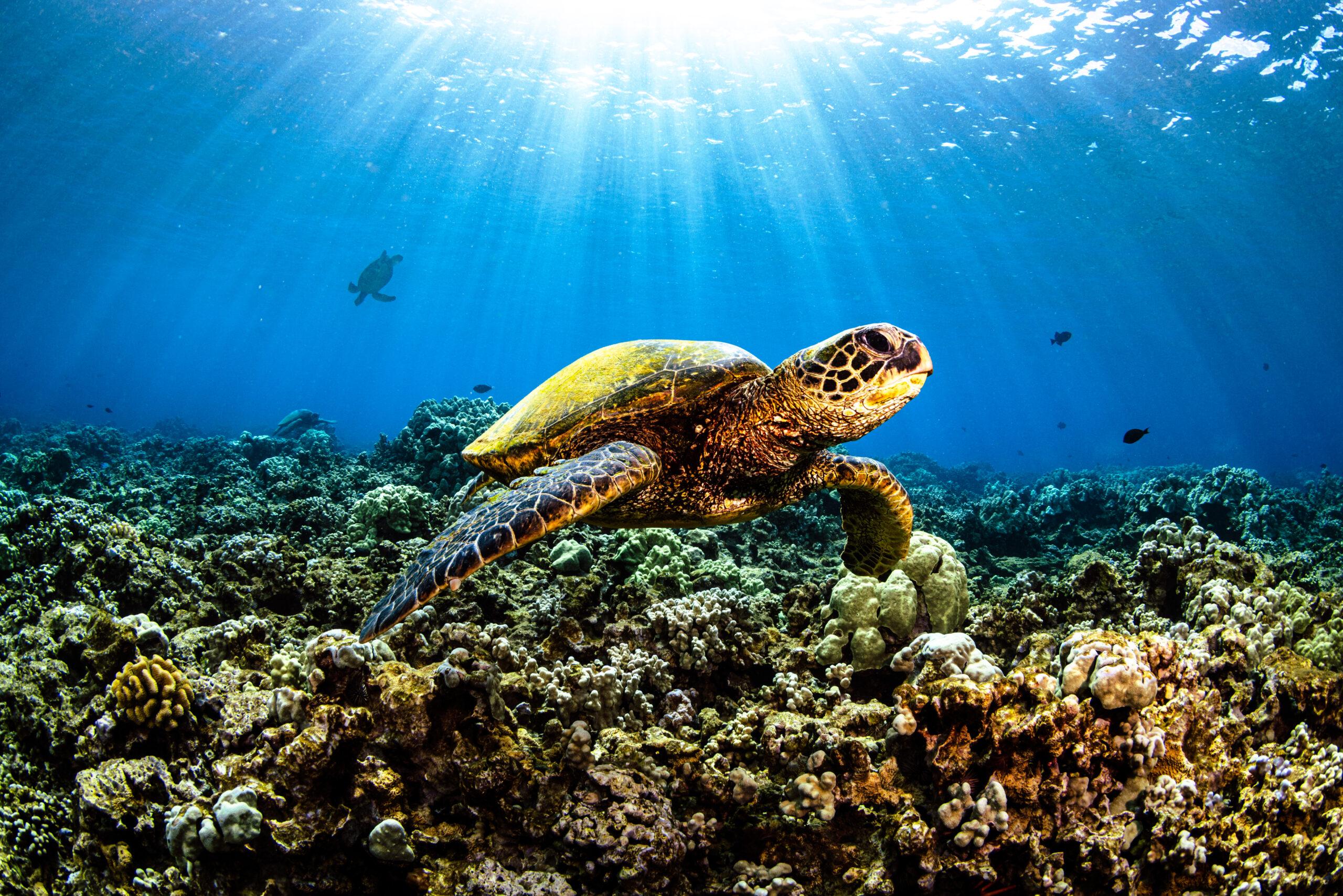
Photo by Jake Houglum, via Pexels. Free under the Pexels License. https://www.pexels.com/photo/sea-turtle-swimming-on-under-deep-blue-water-7714555/