When Climate Disasters Strike, Why Do Some People Leave While Others Stay?
A global study across 216 countries and territories reveals how floods, droughts and tropical cyclones are associated with migration—and why some communities cannot simply move.
When Climate Disasters Strike, Why Do Some People Leave While Others Stay?
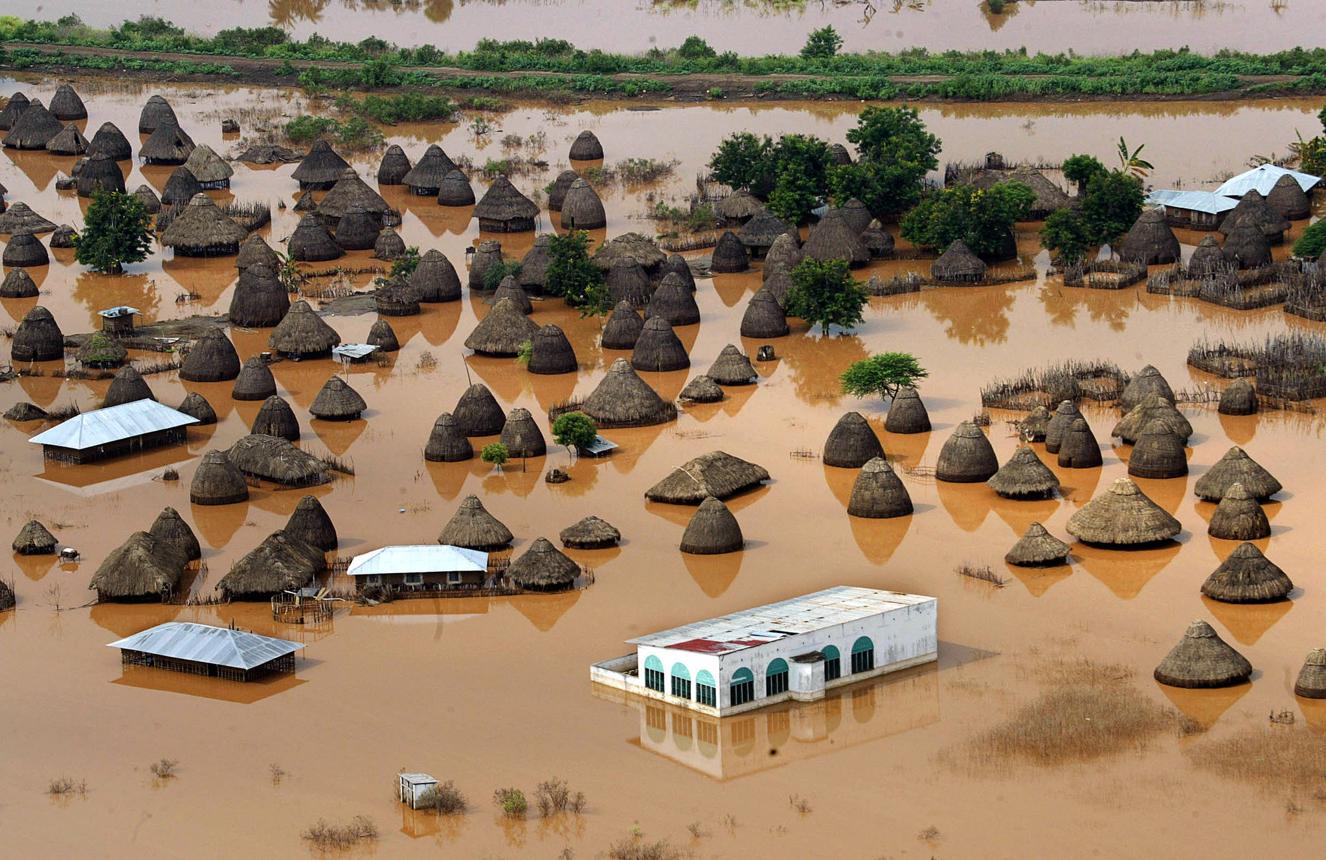
When a flood destroys a home, the immediate assumption is that the people who lived there will move somewhere safer. When drought damages farmland, families may be expected to search for work elsewhere. When a powerful cyclone strikes a coastal community, migration can appear to be the natural next step.
But human movement rarely follows such a simple pattern.
Some families leave after a disaster and never return. Others move temporarily before rebuilding their homes. Some relocate only a few kilometres away, remaining close to the same environmental risks. And many people stay—not necessarily because their communities are safe, but because leaving is financially or practically impossible.
A major international study published in Nature Climate Change in September 2026 offers a broader view of this complicated relationship. By examining subnational migration patterns across 216 countries and territories, researchers found that different climate hazards are associated with different migration outcomes.
The results challenge a familiar assumption about climate change: that increasingly severe environmental events will automatically produce increasingly large movements of people.
Instead, the relationship depends on the type of disaster, the economic circumstances of a region, the timing of repeated events and the migration patterns that existed before the disaster occurred.
A Global Study of Climate and Human Movement
The research, led by Kristina Petrova and colleagues, examined the relationship between four types of climate-related hazards and net migration:
- Floods
- Droughts
- Tropical cyclones
- Crop failures
The team combined climate exposure indicators with annual subnational net migration estimates covering 2000 to 2019.
Rather than looking only at national population totals, the researchers examined smaller administrative areas, allowing them to investigate differences between districts within the same country.
The migration dataset covered 216 countries and territories. The main analysis included more than half a million district-year observations.
The researchers also accounted for several factors that can influence migration independently of climate, including conflict, economic activity, human development, political conditions and population size.
This matters because people do not make migration decisions in isolation from their circumstances. A community experiencing drought may respond differently depending on whether residents have savings, access to transport, alternative employment or government support.
The study’s central finding was that climate hazards do not have one universal relationship with migration.
Floods Can Reduce Migration Instead of Increasing It
One of the most striking findings concerned flooding.
Flood exposure was associated with lower net migration across different regional contexts, with effects that could persist for several years. The association appeared stronger in lower-income areas.
At first, this may seem counterintuitive. If a flood damages homes, roads and livelihoods, why would fewer people move away?
The answer lies partly in what net migration measures.
Net migration represents the balance between people arriving in an area and people leaving it. A decline in net migration does not necessarily mean nobody left. It can also reflect fewer people arriving, or a combination of reduced arrivals and increased departures.
A flood can make a district less attractive to potential newcomers while simultaneously making it harder for existing residents to leave.
Families may lose income, vehicles, savings and access to transport. Roads may be damaged, workplaces may close and housing elsewhere may become unaffordable.
In these circumstances, the disaster can reduce people’s ability to move even when remaining in the affected area is undesirable.
The Difference Between Wanting to Leave and Being Able to Leave
Migration is often discussed as if it were a freely available response to environmental pressure.
In reality, moving requires resources.
A family may need money for transportation, temporary accommodation, a new rental deposit, school transfers and the search for employment. Moving away from agricultural land may also mean losing the primary source of income.
These costs can be particularly difficult to meet after a disaster, precisely when households have already lost assets.
The result is a difficult paradox: the people most exposed to environmental damage may also have the fewest resources available to relocate.
This is one reason why climate-related immobility deserves attention alongside displacement.
People who remain in a vulnerable community are not necessarily choosing to accept the risk. Their options may simply be limited.
Droughts Produce a Different Migration Pattern
The research identified a different relationship between drought and migration.
Droughts were associated with changes in net migration primarily in higher-income settings, with effects that were generally shorter-term.
This does not mean drought is harmless in poorer regions. Nor does it suggest that people in lower-income countries are unaffected by water shortages.
The result concerns the statistical relationship observed in the study’s models, not the total amount of suffering caused by drought.
Drought develops differently from a sudden flood or cyclone. It can unfold over months or years, gradually affecting agriculture, water availability, household income and local employment.
Its consequences may therefore depend heavily on the structure of the local economy.
In a region where agriculture is the main source of income, prolonged drought can reduce the resources people would otherwise use to move. In another setting, households may have savings, insurance, employment alternatives or access to public support that make temporary relocation more feasible.
The same environmental hazard can therefore produce very different mobility outcomes.
The study also highlights the importance of timing. A drought’s association with migration may not be visible immediately, and the relationship can change as the event continues or conditions improve.
Tropical Cyclones Can Leave Long-Lasting Effects
Tropical cyclones presented another distinct pattern.
The researchers found that cyclones were associated with decreases in net migration primarily in lower-income areas, with effects that could persist over several years.
This finding is particularly important because cyclones can damage several parts of a community simultaneously.
Homes, schools, hospitals, roads, electricity networks and local businesses may all be affected. Even when the immediate emergency ends, the economic and social consequences can continue.
Reconstruction may take years. Employment opportunities may remain limited, and residents may struggle to restore the conditions that previously supported their livelihoods.
The study suggests that lower-income communities can experience longer-lasting migration-related effects following these events.
However, the researchers do not claim that every cyclone causes permanent displacement or that all affected residents remain in place. Their analysis identifies average statistical relationships across many districts, not the individual decisions of every household.
Why Repeated Disasters Change the Picture
A single disaster is only part of the story.
Communities increasingly face repeated environmental shocks, sometimes before they have fully recovered from the previous event.
The researchers therefore examined whether consecutive years of exposure produced different relationships with migration compared with isolated events.
Flooding provided an especially interesting example.
In districts that generally experienced net population outflow, four consecutive years of flooding were associated with a positive change in net migration. Shorter sequences did not show the same significant association.
This finding should not be interpreted as evidence that repeated floods attract people to dangerous areas.
The measure reflects net migration, and the result may be influenced by several processes, including changing patterns of departure, arrival and population movement within a district.
It also does not establish why the observed relationship occurred.
What it does show is that repeated exposure can produce patterns that differ from the immediate response to a single disaster.
The relationship between environmental pressure and migration is dynamic. A community’s response to its fourth consecutive year of flooding may be very different from its response to the first.
The Geography of Staying
The idea of climate migration often focuses on people crossing borders or moving from rural areas to large cities.
But many important movements take place over much shorter distances.
A family may move from one side of a district to another. A farmer may leave a village but remain in the same region. A household may temporarily relocate to relatives’ homes before returning after reconstruction.
These movements can be difficult to capture in global migration statistics.
The 2026 study measures net migration across administrative boundaries. As a result, it does not fully capture short-distance movements that take place within the same administrative unit.
This is an important limitation.
A household could move away from a flood-prone neighbourhood while remaining inside the same district. Such a move might reduce the family’s immediate exposure without appearing as a change in district-level net migration.
Conversely, a district could experience declining net migration even while some of its residents are moving away permanently.
Understanding climate-related mobility therefore requires more than counting people who cross regional or national boundaries.
Researchers also need to understand where people move, how far they travel, whether they return and whether their new homes are actually safer.
When Relocation Creates New Risks
Moving away from an environmental hazard does not automatically guarantee safety.
People displaced by disasters may settle in areas with limited infrastructure, insecure housing or fewer employment opportunities.
A new location may offer protection from flooding but introduce other risks, such as poor access to healthcare, transport difficulties or unstable livelihoods.
The experience of relocation also affects social connections.
Families may lose access to relatives, neighbours, community institutions and local knowledge that helped them manage everyday life. For communities whose livelihoods depend on particular landscapes, relocation can mean losing more than a house.
This is why planned relocation is a complex public policy issue rather than simply a matter of finding available land.
A successful relocation programme needs to consider housing quality, employment, education, healthcare, transport, cultural connections and the preferences of affected residents.
Without these elements, relocation can transfer vulnerability rather than resolve it.
Why Climate Adaptation Must Include People Who Cannot Move
The global findings have important implications for climate adaptation.
Policies often focus on protecting infrastructure, strengthening flood defences, improving early-warning systems and supporting emergency evacuations. These measures are essential, but they do not address every dimension of human vulnerability.
Some communities need better protection so residents can safely remain where they live.
Others may need support to relocate before repeated disasters make their homes uninhabitable.
Still others may need financial assistance that allows households to move voluntarily rather than waiting until they have lost nearly everything.
The distinction between these situations matters.
A policy designed around the assumption that everyone can move may fail the people with the fewest resources. A policy that prioritizes keeping communities in place may also be inappropriate where long-term environmental risks are becoming unmanageable.
Effective adaptation therefore requires multiple pathways:
- Protection: Improve infrastructure and services where continued settlement remains viable.
- Preparedness: Strengthen early-warning systems, evacuation plans and emergency support.
- Recovery: Help households restore livelihoods and rebuild safely after disasters.
- Voluntary relocation: Provide fair compensation, suitable housing and access to employment when moving becomes necessary.
- Long-term monitoring: Track repeated exposure and changing risks rather than treating each disaster as an isolated event.
The most effective response will depend on local conditions rather than a universal assumption about migration.
What the Research Cannot Tell Us Yet
The study provides a broad picture of climate-related migration patterns, but several limitations remain.
First, its observation period covers 2000–2019. The findings should not be treated as a real-time forecast of migration in 2026 or beyond.
Second, net migration combines population arrivals and departures into a single balance. It cannot fully explain the individual decisions behind those movements.
Third, the data omit some forms of short-distance mobility within administrative boundaries.
Finally, the analysis is observational. Although the researchers account for several political and socioeconomic factors, they cannot establish that a climate event directly caused a particular migration outcome.
Other influences—including local adaptation measures, housing markets, government policies and existing migration networks—may also shape the patterns.
The study is therefore best understood as a global analysis of associations, not a prediction that a particular disaster will cause a particular number of people to move.
The Future of Climate Migration Is Not Simply About Leaving
Climate change is often described through maps of rising temperatures, expanding drought zones and areas exposed to flooding.
But the human consequences cannot be understood through physical risk alone.
The ability to respond to a disaster is shaped by income, infrastructure, political conditions, social networks and access to resources. Two communities facing similar environmental threats may experience very different migration outcomes.
Some residents may have the means to relocate before conditions deteriorate. Others may leave only after repeated losses. Some may remain because their livelihoods depend on the land. Others may have no realistic alternative.
The research published in Nature Climate Change offers an important reminder: environmental pressure does not translate automatically into human movement.
The future of climate migration will not be determined only by where hazards occur. It will also depend on who has the resources to move, who can afford to stay and whether governments can provide realistic alternatives before a crisis becomes irreversible.
In a warming world, understanding why people move is important. Understanding why they cannot move may be just as important.
Research Sources
-
Petrova, K., Zantout, K., Zimmermann, S., et al. (2026). “Compound and heterogeneous relationships between climate extremes and global net migration.” Nature Climate Change, 16, 1162–1169. Published September 11, 2026.
https://doi.org/10.1038/s41558-026-02752-4 -
Open-access full text and supplementary research materials:
https://pmc.ncbi.nlm.nih.gov/articles/PMC13638451/ -
Replication data and analysis code:
https://doi.org/10.5281/zenodo.21843679
https://github.com/kpppetr/district-migration-climate-impacts