Forest Bathing: How Time in Nature Reduces Stress and Improves Health
Forest bathing (shinrin-yoku) is the Japanese practice of immersing yourself in nature through your senses. Research shows it lowers cortisol, reduces blood pressure, and improves mood. A practical guide to forest bathing and nature therapy.
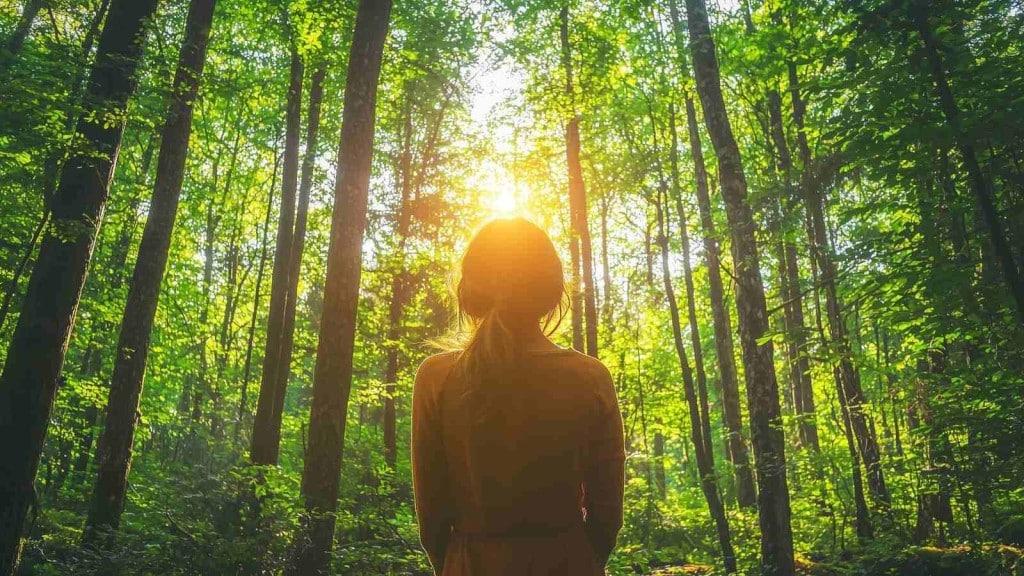
Forest Bathing: How Time in Nature Reduces Stress and Improves Health
You do not need to hike, exercise, or achieve anything in a forest. You simply need to be there " walking slowly, breathing, noticing. This is forest bathing, or shinrin-yoku, a practice developed in Japan in the 1980s that has since spread worldwide as a form of nature therapy.
Forest bathing is not hiking. It is not exercise. It is not about reaching a destination or counting steps. It is about immersion: using your senses to absorb the atmosphere of the forest. Research over the past two decades has found measurable benefits " lower cortisol, reduced blood pressure, improved immune function, and better mood " from as little as two hours among trees.
As urbanization accelerates and screen time dominates daily life, forest bathing offers a simple, accessible antidote to chronic stress.
What Forest Bathing Is
Shinrin-yoku translates literally to “forest bathing” or “taking in the forest atmosphere.” It was developed by Japan’s Forestry Agency in 1982 as a public health initiative. Japan is heavily forested (about two-thirds of the country), yet its population is highly urbanized and stressed. The agency proposed that spending time in forests could improve public health.
The practice is deliberately non-goal-oriented. You walk slowly " perhaps one kilometer in two hours. You stop frequently. You touch bark, smell leaves, listen to birds, watch sunlight filter through the canopy. You do not need to identify species or understand ecology. You simply pay attention.
The Science: What Research Shows
Japanese and South Korean researchers have conducted dozens of studies on forest bathing, measuring physiological markers before and after time in forests versus urban environments.
Cortisol reduction: Multiple studies found that salivary cortisol levels " a primary stress hormone " decrease significantly after forest walks compared to city walks. One landmark study found cortisol levels nearly 13% lower after forest exposure.
Blood pressure and heart rate: Forest environments consistently show lower systolic and diastolic blood pressure and lower heart rate compared to urban settings. The effect appears within minutes and can persist for days.
Immune function: Trees release phytoncides " antimicrobial organic compounds (such as alpha-pinene and limonene) that protect them from insects and decay. When humans breathe these compounds, studies show increased activity and number of natural killer (NK) cells, a type of white blood cell that fights viruses and tumors. One study found elevated NK cell activity lasting up to 30 days after a three-day forest trip.
Mood and cognition: Forest exposure correlates with reduced scores on depression, anxiety, anger, and confusion scales. It also improves attention and working memory " relevant to the “attention restoration theory,” which suggests natural environments restore cognitive resources depleted by urban stimulation.
Sleep: Some studies report improved sleep quality after forest bathing, likely due to reduced stress and increased exposure to natural light cycles.
Most effects appear after 30 minutes to two hours in a forest environment. The benefits are not limited to wilderness " urban parks and tree-lined streets also help, though dense forests with high biodiversity tend to produce stronger responses.
Why Nature Affects Us
Several theories explain the effect:
Biophilia hypothesis: Proposed by biologist E.O. Wilson, it suggests humans have an innate tendency to connect with nature because we evolved in natural environments. Cities are evolutionarily novel; forests are familiar.
Attention restoration theory: Urban environments demand directed attention (navigating traffic, filtering noise, focusing on screens), which depletes mental resources. Natural environments use “soft fascination” " gentle, effortless attention (watching leaves move, listening to water) " that allows directed attention to recover.
Stress reduction theory: Natural environments trigger physiological relaxation " lowered heart rate, reduced muscle tension, decreased cortisol " as an evolved response to safe, resource-rich environments.
Air quality: Forests have lower air pollution and higher oxygen levels than traffic-congested cities, though this alone does not explain the psychological benefits.
How to Practice Forest Bathing
You do not need a guide, special equipment, or a remote wilderness. You need a place with trees and the willingness to slow down.
Choose a location. A forest is ideal, but a park with mature trees, a botanical garden, or even a tree-lined cemetery works. Look for places with varied vegetation, minimal traffic noise, and somewhere to sit.
Leave devices behind or silent. Phones fragment attention. If you must carry one, turn it off or set it to do-not-disturb.
Walk slowly. Aim for less than one kilometer per hour. Stop whenever something catches your attention.
Engage your senses, one at a time:
- Sight: Notice the shades of green, the patterns of bark, the movement of leaves, the play of light and shadow.
- Sound: Listen for birds, wind in the canopy, distant water, your own footsteps.
- Smell: Breathe deeply. Notice the scent of damp soil, pine resin, flowers, or decaying leaves.
- Touch: Run your hand over bark, moss, or a leaf. Notice temperature and texture.
- Taste: If you know a plant is safe (such as a wild blackberry you can identify confidently), taste it. Otherwise, simply notice the air on your tongue.
Sit still. Find a spot and sit for 15-20 minutes. Let the forest come to you. Birds may return after your initial disturbance. You may notice details you missed while walking.
Breathe. Slow, deep breathing increases your intake of phytoncides and signals safety to your nervous system.
Stay for at least two hours. Research suggests two hours is a threshold for measurable benefits, though even shorter exposure helps. If you only have 30 minutes, use it fully rather than rushing.
Do it regularly. Weekly or biweekly forest visits produce cumulative benefits. One annual trip is pleasant but not transformative.
Forest Bathing vs. Hiking
| Forest Bathing | Hiking | |
|---|---|---|
| Goal | Presence, relaxation | Distance, summit, exercise |
| Pace | Very slow | Moderate to fast |
| Distance | 1-2 km max | 5-20 km typical |
| Focus | Internal, sensory | External, navigational |
| Equipment | None needed | Boots, poles, water, pack |
| Outcome | Calm, restored | Fatigue, accomplishment |
Both are valuable. Forest bathing is not a replacement for exercise, but a complement " a practice for nervous system regulation rather than cardiovascular fitness.
Urban Alternatives
If you cannot reach a forest regularly:
- Urban parks: Even small parks with mature trees provide measurable stress reduction.
- Tree-lined streets: Walking slowly down a street with a canopy of trees offers some benefits.
- Indoor plants: Houseplants improve indoor air quality and modestly reduce stress, though effects are weaker than forest exposure.
- Nature sounds and images: Recordings of forest sounds and views of nature scenes produce small but real stress reductions " better than nothing, but not equivalent to real exposure.
- Window views: Office workers with views of trees report lower stress and higher job satisfaction than those without.
Precautions
Ticks and insects: In forested areas, especially in spring and summer, wear long sleeves and pants tucked into socks. Check for ticks afterward. Use repellent if needed.
Weather: Dress in layers. Forest microclimates can be cooler and damper than open areas.
Terrain: Forest trails can be uneven, slippery, or steep. Move slowly and watch your footing.
Allergies: Pollen, mold, and plant sap can trigger reactions. Know your allergies before spending extended time in forests.
Safety: Tell someone where you are going. Carry water. Know the trail or stay on marked paths. In remote areas, carry a map and phone (even if you keep it silent).
Making It a Habit
The strongest evidence supports regular exposure, not occasional retreats. Consider:
- A weekly 60-90 minute visit to a local park or wooded area
- A monthly longer forest visit (half-day or full-day)
- Daily micro-doses: eating lunch under a tree, walking a tree-lined street, tending houseplants
Forest bathing is not a cure for serious mental health conditions. It is a preventive practice, a complement to therapy and medical care, and a reminder that humans are part of nature " not separate from it.
Frequently Asked Questions
What is the difference between forest bathing and hiking? Hiking is goal-oriented exercise (distance, elevation, destination). Forest bathing is slow, sensory immersion with no destination. You can forest-bathe on a hiking trail, but the intention differs.
Do I need a forest, or will a park work? Dense forests produce the strongest effects, but urban parks with trees also reduce stress. Any green space with mature vegetation is beneficial.
How long should I forest bathe? Research suggests two hours as a beneficial duration, but even 20-30 minutes produces measurable stress reduction. Weekly or biweekly practice is ideal.
Is forest bathing backed by science? Yes. Dozens of peer-reviewed studies, primarily from Japan and South Korea, have documented reduced cortisol, lower blood pressure, improved immune function, and better mood after forest exposure.
Can I forest bathe in winter? Yes. Evergreen forests provide phytoncides year-round. Dress warmly and move slowly to stay comfortable.
Do I need a certified guide? No. Forest bathing can be practiced independently. Guides can help beginners slow down and engage their senses, but the practice itself is simple and self-directed.