When Factories Become Museums: The New Life of Industrial Heritage
From abandoned factories to museums and cultural centres, adaptive reuse is reshaping how cities preserve industrial history and use historic buildings.
When Factories Become Museums: The New Life of Industrial Heritage
A century ago, the sound of machinery defined the daily rhythm of many cities. Factory whistles marked the beginning of shifts, railway sidings carried raw materials through industrial districts, and enormous warehouses stored the products that powered growing economies.
Today, many of those buildings stand silent.
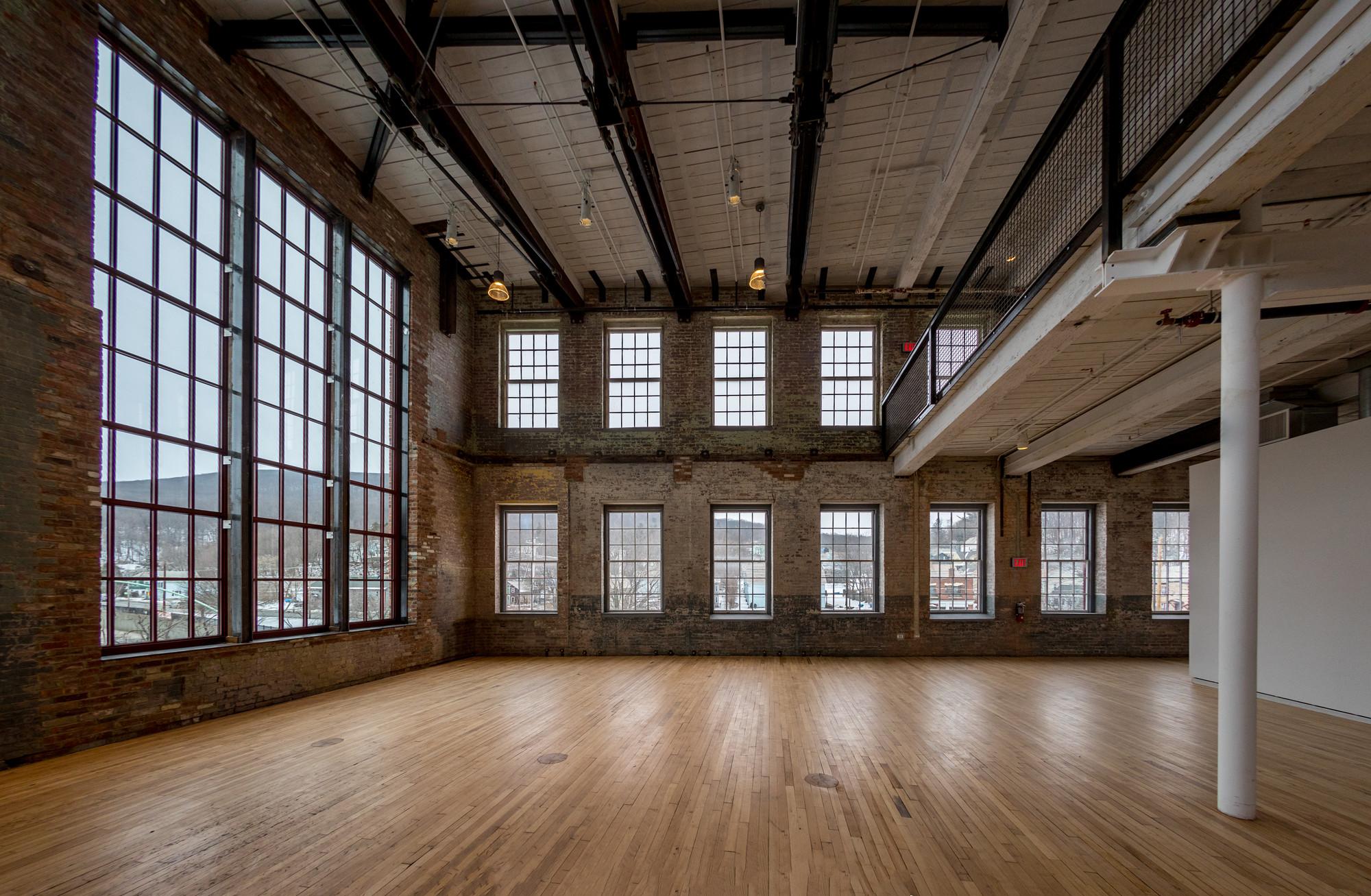
Some have been demolished to make room for apartments, offices and transport infrastructure. Others have remained empty for decades, their machinery removed and their windows broken. But a growing number are finding an unexpected second life as museums, galleries, libraries, creative workspaces and public gathering places.
The transformation is known as adaptive reuse: the process of giving an existing building a new function while retaining important elements of its original structure and identity.
It is more than an architectural trend. It raises important questions about how societies remember industrial history, what should be preserved, who benefits from urban redevelopment and whether an old building can remain meaningful after its original purpose disappears.
In 2026, new research is giving this discussion additional momentum. Studies are examining not only whether historic buildings can be reused, but also how authenticity, environmental performance, social inclusion and economic viability should influence decisions.
The most interesting question is no longer simply what can be built inside an old factory. It is what a city chooses to remember when it decides to keep one.
Why industrial buildings are different from ordinary historic architecture
Industrial heritage includes factories, mills, power stations, warehouses, shipyards, railway facilities, mining structures and other buildings associated with production and transportation.
Unlike many historic monuments, these structures were often designed around practical requirements rather than visual symbolism.
Their architecture reflects the technologies and economic priorities of their time.
Large windows provided natural light for workers. High ceilings accommodated machinery. Heavy floors supported industrial equipment. Long halls allowed materials and products to move through production processes.
These features can make industrial buildings surprisingly adaptable.
A former manufacturing hall may offer enough open space for exhibitions, performances or community events. A warehouse can become a library or cultural centre. An old railway building might accommodate restaurants, shops or public services.
But industrial architecture also presents challenges.
Buildings may contain contaminated materials, deteriorating structures, obsolete electrical systems or foundations that were never designed for modern public use. Some factories have been altered so extensively that their historical layout is difficult to understand.
Preservation therefore requires more than keeping an attractive brick façade.
The building’s structural character, original materials, production history and relationship with its surrounding neighbourhood may all contribute to its heritage value.
From production spaces to cultural destinations
Several well-known projects illustrate how industrial structures can become part of contemporary urban life.
Tate Modern: A power station becomes a museum
London’s Tate Modern is one of the most recognised examples of industrial adaptive reuse.
The museum occupies the former Bankside Power Station, a large electricity-generating facility designed by architect Giles Gilbert Scott.
The power station stopped generating electricity in 1981. Rather than demolishing the structure, the project transformed it into a major contemporary art museum, which opened in 2000.
Its enormous turbine hall became one of the building’s defining spaces.
The success of Tate Modern demonstrates an important principle: the architectural character of an industrial building can become an asset rather than an obstacle.
Instead of hiding the scale and industrial appearance of the original structure, the museum uses them as part of the visitor experience.
However, the project also illustrates a wider challenge. Cultural institutions can attract tourism, investment and new businesses, but the benefits do not necessarily reach every resident of the surrounding area equally.
Zollverein: Preserving the memory of coal and steel
In Essen, Germany, the Zollverein Coal Mine Industrial Complex provides another significant example.
Once associated with the Ruhr region’s coal and steel economy, the site became a UNESCO World Heritage property in 2001.
Its industrial structures, including the distinctive shaft tower of Shaft XII, are now part of a broader cultural and educational landscape.
The complex hosts museums, exhibitions, design activities and other cultural uses.
Zollverein is particularly interesting because its significance is not limited to architecture.
The site tells the story of industrial labour, technological development, energy production and the economic transformation of an entire region.
Preserving it allows visitors to encounter the physical environment in which generations of people worked.
This is an important distinction. A former factory converted into a fashionable venue may preserve its walls while losing much of its social history. A successful heritage project should make the building’s original purpose understandable.
Istanbul’s industrial heritage: A changing urban landscape
Istanbul offers its own examples of industrial buildings being reconsidered as cultural and public spaces.
The city’s industrial history is visible in former production facilities, waterfront structures and large complexes associated with manufacturing and transportation.
Projects such as the transformation of the SilahtaraÄŸa Power Plant into santralistanbul demonstrate how industrial infrastructure can become part of a contemporary cultural institution.
The former power station, which began operating in 1914, was transformed into an energy museum and cultural campus associated with Istanbul Bilgi University.
Its machinery and industrial spaces provide a direct connection to the city’s technological and urban history.
The wider issue is especially relevant for Istanbul because redevelopment pressures are intense. Valuable industrial structures may occupy strategically located land, making demolition or extensive redevelopment financially attractive.
A 2026 study examining industrial heritage buildings in Istanbul as potential eco-friendly museums identified 37 former industrial buildings through archival research, literature and institutional records. Six case studies were selected for closer examination.
The research considers the economic, ecological and socio-cultural dimensions of reuse.
Its significance lies in treating industrial heritage not simply as a collection of old buildings, but as a resource that requires long-term planning, management and public engagement.
What does it mean to preserve authenticity?
One of the most difficult questions in adaptive reuse is deciding how much change a historic building can accommodate.
A factory cannot necessarily remain in its original condition if it is expected to serve thousands of visitors. Modern safety requirements, accessibility standards, heating, ventilation and fire protection may require substantial alterations.
Yet excessive renovation can remove the very qualities that make the building historically important.
A former factory converted into a completely generic shopping centre may remain physically intact while losing much of its industrial identity.
This tension is at the centre of recent academic research.
A systematic review published in npj Heritage Science on September 24, 2026, analysed 176 studies published between 2015 and 2025. It examined how authenticity is evaluated in projects involving the adaptive reuse of architectural heritage.
The researchers identified five connected dimensions:
- Cultural significance
- Environmental performance
- Social considerations
- Technology
- Policy and institutional responsibility
One important finding was that technical, environmental and cultural evidence appeared more frequently in the research than social inclusion and policy accountability.
In other words, studies often examine whether a building can be renovated, whether its energy performance can be improved and whether its architectural character can be retained.
But fewer studies translate questions about community participation, legitimacy and long-term institutional responsibility into practical decision-making criteria.
That imbalance matters.
A building can be architecturally impressive and environmentally efficient while still failing to serve the people who live around it.
Authenticity should therefore involve more than preserving bricks, steel frames and machinery. It should also consider whether the building’s history remains visible and whether its new purpose respects the cultural meaning it carries.
Is adaptive reuse better for the environment?
Demolishing an existing building and constructing a replacement requires materials, transportation, energy and construction work.
Keeping a substantial part of the original structure can avoid some of those impacts.
This is one reason adaptive reuse is increasingly discussed as part of sustainable urban development.
The concept is closely connected to embodied carbon: the greenhouse gas emissions associated with producing, transporting, installing, maintaining and eventually disposing of building materials.
Concrete, steel, glass and other construction materials carry environmental costs before a new building is even occupied.
When an existing structure can be safely retained, some of those material-related emissions may be avoided.
Adaptive reuse can also reduce construction waste and preserve established urban forms.
However, the environmental argument is not automatic.
An old industrial building may have poor insulation, inefficient heating systems or contaminated materials. Converting it into a comfortable modern facility can require extensive energy-intensive work.
A project that preserves only a small part of a building while adding a large new structure may offer fewer environmental advantages than its promotional material suggests.
A credible environmental assessment should compare realistic alternatives:
- Retaining and adapting the existing building
- Renovating it with different levels of intervention
- Demolishing and rebuilding
- Leaving the structure unused, where that is a feasible and safe option
The comparison should consider the building’s expected lifetime, operational energy consumption, materials, maintenance and future adaptability.
The objective is not to assume that old buildings are always greener. It is to establish whether retaining and adapting a particular building produces better overall results than the alternatives.
The economic opportunity " and the risk of displacement
Industrial heritage projects can create economic opportunities.
A former factory transformed into a museum may attract visitors, support restaurants and shops, create employment and encourage investment in surrounding streets.
Creative workspaces can provide locations for artists, designers and small businesses. Cultural institutions can give neighbourhoods new public facilities.
But successful redevelopment can also increase property values and commercial rents.
When an industrial district becomes fashionable, existing residents and small businesses may find it increasingly difficult to remain.
This is the familiar problem of gentrification.
The transformation of industrial heritage can therefore produce two very different outcomes.
In one scenario, a project creates accessible cultural infrastructure, supports local employment and strengthens the identity of an existing neighbourhood.
In another, it becomes a high-cost destination designed mainly for visitors, investors and higher-income consumers.
The physical building may be preserved in both cases. The social consequences can be very different.
This is why community participation should not be treated as a final consultation after the design has already been decided.
Residents, former workers, local organisations and small businesses can contribute knowledge that is difficult to recover from architectural drawings alone.
They may also help determine which activities should take place inside the building and whether the new institution genuinely serves the surrounding area.
Technology is changing how historic buildings are assessed
Modern conservation projects increasingly rely on digital tools.
Laser scanning, photogrammetry, three-dimensional modelling and Building Information Modelling can help architects and engineers document complex structures.
For historic buildings, specialised approaches known as Heritage Building Information Modelling, or HBIM, can connect physical measurements with information about materials, construction phases, damage and historical alterations.
These systems can improve the documentation of buildings that have undergone decades of changes.
They may also help project teams compare alternative uses before committing to expensive interventions.
A September 2026 study published in Türkiye examined how Building Information Modelling and AI-supported multi-criteria decision-making could be used to assess potential new functions for the Aya Yorgi Church in Osmaneli.
The research considered three possible scenarios: a museum, a cultural centre and an exhibition hall.
Its assessment included environmental performance, maintenance and operating costs, visitor capacity and spatial suitability.
The museum scenario received the highest score in the study’s evaluation.
This does not establish that museums are generally the best use for historic religious buildings. The result applies to the specific building, criteria and alternatives examined.
It does, however, demonstrate how digital documentation and structured decision-making can support more transparent conservation choices.
Technology can help answer technical questions. It cannot independently decide which historical values deserve priority or whose interests should shape a building’s future.
Those remain cultural and public decisions.
Not every abandoned factory should become a museum
The growing popularity of adaptive reuse creates a temptation to treat it as a universal solution.
It is not.
Some industrial buildings have limited architectural significance. Others may be structurally unsafe or heavily contaminated. Some sites may have no realistic demand for a museum, gallery or commercial venue.
In certain cases, demolition and carefully planned replacement may be the more practical option.
Even when preservation is justified, a museum is not always the best use.
A building might be more valuable as affordable workspace, a public library, an educational facility, a community centre or a mixed-use development.
The choice should follow a careful assessment of the building and its context.
Several questions are particularly important:
- What historical and architectural qualities make the building worth preserving?
- Can its structure safely accommodate a new use?
- What environmental remediation or technical upgrades are necessary?
- Is there a realistic long-term operating model?
- Will local residents be able to access and benefit from the project?
- Can the new function continue without destroying the building’s historical character?
The answers will differ from one site to another.
A successful project is not necessarily the one with the most spectacular architecture or the largest visitor numbers. It may be the one that finds a sustainable purpose without erasing the building’s history.
Keeping the past useful
Industrial buildings are physical records of how societies produced energy, manufactured goods, transported materials and organised labour.
Their value is not limited to their appearance.
A former textile mill can reveal the history of manufacturing and working conditions. A power station can explain how a city developed its electricity infrastructure. A railway warehouse can show how trade and transportation shaped an urban economy.
When these buildings disappear, part of that physical record disappears with them.
Adaptive reuse offers a way to keep some of that history present in everyday life.
But preservation should not turn industrial heritage into a decorative backdrop. The stories of workers, communities, technological change and economic transformation deserve to remain part of the experience.
The most meaningful conversions do not pretend that the factory was always a museum. They allow visitors to understand what the building was, why it mattered and how its role has changed.
A building that once produced goods can now produce something different: knowledge, cultural activity and a shared connection to the past.
That may be the most valuable second life an industrial structure can have.
Sources and Further Reading
- Ma, Y., Zhang, X., Cao, Z. et al. (2026). Adaptive reuse of architectural heritage for sustainable development: a systematic review from an authenticity perspective. npj Heritage Science. Published September 24, 2026.
- Aburumman, S. A., Bilge, A. C. & Ãœst, S. (2026). A study of revitalizing industrial heritage buildings in Istanbul as eco-friendly museums. Journal of Cultural Heritage Management and Sustainable Development. Available online August 14, 2026.
- Bujdáková, K. & Schleicher, A. (2026). Contemporary Forms of Adaptive Reuse in Architecture: From Historic Monuments to Ephemeral Interventions. Architecture, 6(3), 152. Published September 1, 2026.
- Öztürk, G. B. (2026). BIM and AI-Supported Decision-Making for the Adaptive Reuse of Historic Buildings: The Osmaneli Aya Yorgi Church Case Study. Fırat Ãœniversitesi Mühendislik Bilimleri Dergisi. Published September 30, 2026.
- Tate Modern " History of the Building.
- UNESCO World Heritage Centre " Zollverein Coal Mine Industrial Complex.
Editorial note: Adaptive reuse outcomes depend on the condition, heritage significance, location and intended function of each building. Environmental and economic benefits should be evaluated against realistic alternatives rather than assumed in advance.