The 125,000-Year-Old Hunting Technology Hidden in Arabia's Ancient Desert
Archaeologists found stone tools, animal remains and possible plant-poison residues at an ancient Saudi Arabian lakeshore, revealing sophisticated prehistoric technology.
The 125,000-Year-Old Hunting Technology Hidden in Arabia’s Ancient Desert
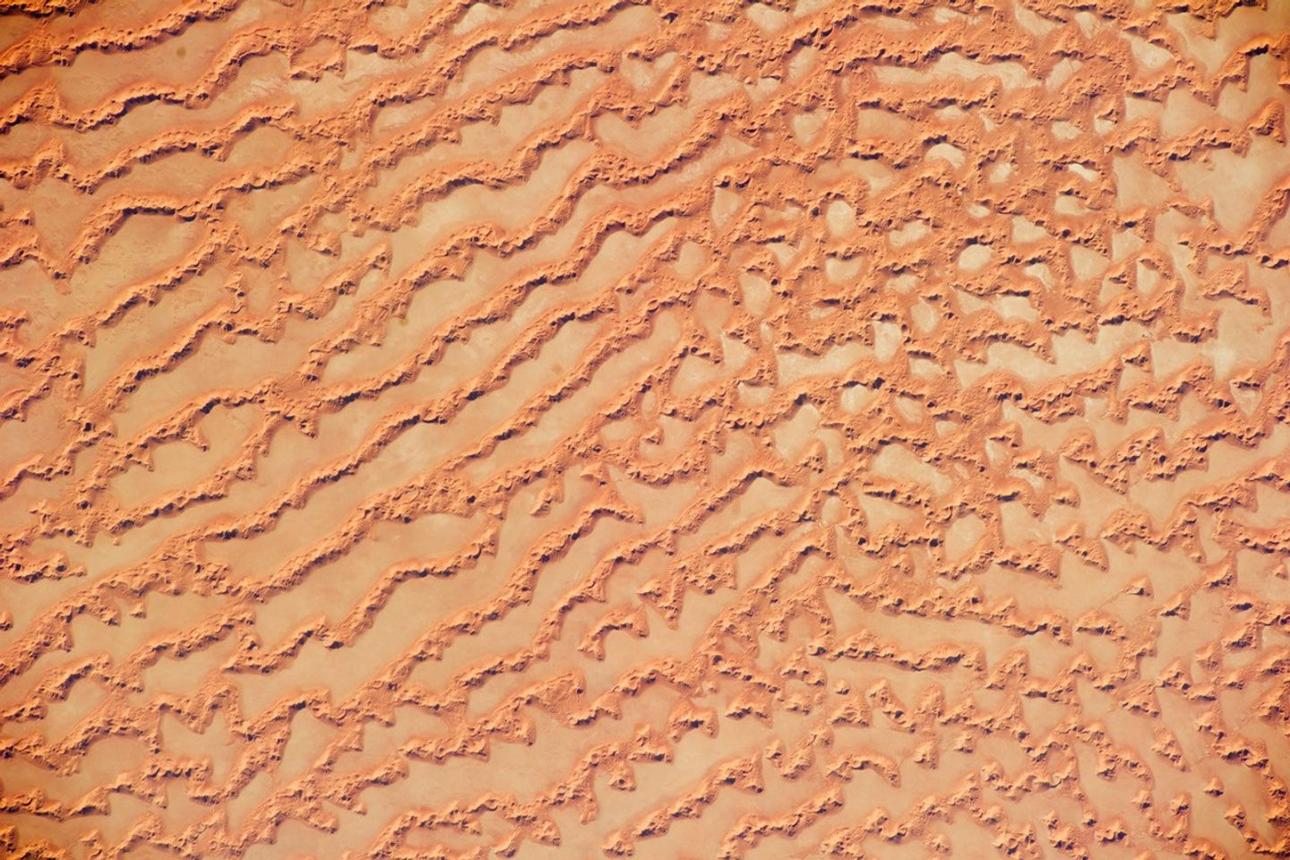
The Empty Quarter of the Arabian Peninsula is one of the most inhospitable landscapes on Earth. Vast dunes, extreme temperatures and scarce water dominate a region that appears almost entirely disconnected from the environments that once supported large populations of animals and early humans.
Yet around 125,000 years ago, parts of this landscape looked remarkably different.
A freshwater lake occupied what is now southern Saudi Arabia. Grasslands, vegetation and wildlife surrounded its shores. Among the animals living in this environment were hippopotamuses, large buffalo, gazelles, camels and ostriches.
Archaeologists investigating an ancient lakeshore at a site called 'Uruq Aljelibah have now uncovered evidence of a surprisingly sophisticated technological system. Their discoveries include thousands of stone artefacts, animal remains, preserved plant residues and stone weapon points carrying chemical traces associated with a poisonous plant.
The research, published in Science on November 12, 2026, provides a rare opportunity to examine how prehistoric populations used both animal and plant resources in an environment that has since become desert.
The possible use of plant-based poison is particularly intriguing. If the interpretation is confirmed, it could push evidence for poison-assisted hunting considerably further back in human history.
A prehistoric lake beneath the Empty Quarter
The archaeological site lies near the former Lake Mundafan in Saudi Arabia’s Rub’ al-Khali, widely known as the Empty Quarter.
Today, the surrounding landscape is dominated by sand dunes. During a humid climatic period known as Marine Isotope Stage 5e, however, the region supported a large freshwater lake.
Researchers estimate that the ancient lake covered approximately 340 square kilometres and reached a maximum depth of around 29 metres.
Its surroundings provided access to water, vegetation and animals that would have made repeated human activity possible.
The fossil record gives an indication of how different this environment was from the modern desert. Researchers documented remains of hippopotamuses, extinct long-horned buffalo, camels, Arabian oryx, gazelles and ostriches.
The presence of these animals suggests that the ancient lakeshore was part of a productive ecosystem rather than simply a temporary source of drinking water.
For prehistoric communities, such an environment could provide food, materials for tools and access to plants that were difficult to obtain in drier landscapes.
The discovery also challenges the tendency to describe ancient Arabia primarily as a corridor through which early human populations travelled between Africa and Asia.
The evidence from Mundafan suggests that people were doing more than passing through. They were exploiting local resources and carrying out repeated activities within this environment.
More than 5,500 stone artefacts reveal a complex activity area
The archaeological team documented 5,511 stone artefacts at 'Uruq Aljelibah, alongside more than 500 fossil specimens.
The collection includes stone tools and points associated with hunting, butchery and other activities.
One important aspect of the discovery is the spatial relationship between the artefacts and animal remains.
Researchers identified concentrations of tools and fossils in areas associated with the former lakeshore. Some stone pieces could also be fitted back together, a process known as refitting.
Refitting helps archaeologists understand how stone tools were manufactured and used. When fragments from the same original piece are found close together, they can provide evidence about where tool production took place.
At Mundafan, these patterns support the interpretation that people repeatedly made tools and processed animal resources around the lakeshore.
This is valuable because many prehistoric sites preserve only fragments of human activity. Stone tools may survive while wooden handles, plant fibres and other organic components disappear.
At 'Uruq Aljelibah, the preservation of additional organic residues allows researchers to reconstruct a wider range of technological activities.
Chemical traces point to possible poison-assisted hunting
The most striking finding concerns several stone points that contained chemical residues associated with Acokanthera schimperi, a toxic plant known as an arrow-poison tree.
The plant is native to parts of eastern and central Africa and southern Arabia. Its toxic compounds have historically been used by some African hunting communities to prepare poisoned projectile weapons.
The researchers analysed stone tools for organic residues and chemical biomarkers. Several points showed traces associated with the plant.
Other evidence included impact damage and animal-derived residues near the tips.
Taken together, these observations support the interpretation that the points may have been used as weapon tips in composite hunting systems, potentially involving plant-based poison.
The distinction between a stone point and a complete weapon is important.
A hunting weapon could combine a stone tip with a wooden shaft, plant fibres and resin. The stone component would provide the cutting or penetrating edge, while organic materials could secure it to a larger structure.
If toxic plant extracts were deliberately applied, the weapon would represent a more complex technological system than a simple sharpened stone.
However, the chemical evidence does not reveal every stage of the process. Researchers have not established precisely how the poison was prepared, how it was applied or whether the recovered residues demonstrate that a particular weapon was successfully used to poison an animal.
The finding is therefore best understood as evidence consistent with possible poison-assisted hunting.
Why poison would have changed the hunting process
Hunting large animals with relatively simple weapons involved substantial risks.
An injured animal could remain dangerous, and a successful hunt might require cooperation between several people.
A toxic substance could potentially change the effectiveness of a weapon by affecting an animal after the initial injury.
Plant-based poisons can contain compounds that interfere with vital biological processes. The effects depend on the specific substance, its concentration and the way it enters the body.
This does not mean that prehistoric hunters necessarily understood toxicity in modern scientific terms.
Knowledge could have developed through observation and repeated experience with plants and animals. Communities may have learned which substances produced particular effects and how to handle them.
The discovery raises questions about the depth of this knowledge among early human populations.
It also highlights the difficulty of reconstructing prehistoric technology. A stone point may survive for tens of thousands of years, while the plant extract, wooden shaft and binding materials that made it functional would normally disappear.
At Mundafan, preserved residues provide an unusual opportunity to investigate those missing components.
The forgotten importance of plants in prehistoric technology
The research is not only about hunting weapons.
Analyses of the archaeological materials also revealed evidence of plant processing involving palms, tubers, trees and shrubs.
These resources could have served several purposes.
Some plants may have been used as food. Others could provide fibres, structural materials or substances suitable for making adhesives and bindings.
Plant fibres were particularly important in prehistoric technologies because they could be transformed into cordage, woven materials and attachments.
Resins could help secure stone components to wooden handles or shafts.
Wood, meanwhile, could be shaped into tools and other objects that rarely survive in open archaeological environments.
The evidence from 'Uruq Aljelibah demonstrates why early human technology should not be understood only through the stone objects recovered from excavations.
Stone tools were often part of larger systems that combined multiple materials and different types of knowledge.
The organic components were just as important, even if they are normally much harder to detect.
What the discovery reveals about ancient human migration
Arabia occupies an important geographical position between Africa and Asia.
During periods of increased rainfall, lakes and vegetation could expand across areas that are now extremely dry. These environmental changes may have created routes through which human populations could move into Southwest Asia and beyond.
Researchers have long investigated the possibility that early human dispersals were influenced by these changing climatic conditions.
The Mundafan discovery adds another dimension to that discussion.
Instead of presenting ancient Arabia only as a geographical passage, the archaeological evidence reveals a landscape that could support repeated occupation and resource exploitation.
The combination of stone technology, animal remains and plant processing suggests that prehistoric populations developed ways of adapting to local environments.
The researchers attribute the archaeological assemblage to early Homo sapiens, consistent with evidence for the presence of our species in Southwest Asia during this broader period.
However, no human fossils have been recovered directly from the site.
The identity of the toolmakers is therefore an archaeological interpretation rather than a conclusion based on skeletal remains found alongside the tools.
An important limitation: how old are the weapons themselves?
One of the most important details in the research concerns the dating of the archaeological site.
The surrounding lake sediments were dated using optically stimulated luminescence, or OSL. Additional chronological information came from uranium-series and electron spin resonance analyses of fossil hippopotamus teeth.
Together, the dating evidence places the ancient lakeshore environment at approximately 125,000 years ago.
But this does not automatically establish the exact age of every stone tool found there.
The artefacts were collected from the surface rather than excavated from sealed archaeological layers that could be directly associated with the dated sediments.
This creates an important distinction between the age of the ancient landscape and the age of individual objects recovered from it.
The tools may be associated with the ancient lakeshore activity, but their precise chronological relationship requires further investigation.
Consequently, the discovery should not yet be presented as definitive proof that poisoned hunting weapons were manufactured exactly 125,000 years ago.
The chemical residues and archaeological context make the interpretation significant, but future excavations may provide stronger evidence.
Finding comparable artefacts preserved within securely dated sediment layers would help resolve this question.
What makes this discovery different?
Archaeologists have discovered ancient stone weapons, evidence of composite tools and traces of prehistoric hunting at other sites.
What makes 'Uruq Aljelibah especially valuable is the combination of different forms of evidence.
Researchers are not relying on stone points alone. They can examine animal remains, use-wear, impact damage, plant-derived residues and the spatial distribution of artefacts.
This creates a more detailed picture of how people may have lived and worked around the ancient lake.
It also demonstrates the importance of interdisciplinary archaeology.
Chemical analysis can identify substances that are invisible to ordinary inspection. Microscopic studies can reveal how tools were used. Geological dating helps reconstruct environmental conditions, while spatial analysis provides information about the organisation of activities.
No single method can answer every question, but combining them can reveal aspects of prehistoric life that would otherwise remain hidden.
A different picture of the ancient Arabian world
The modern Empty Quarter is often associated with extreme dryness and environmental isolation.
The archaeological record from Mundafan reveals a much more dynamic past.
Around the time represented by the ancient lake deposits, the region supported freshwater habitats, large animals and vegetation. Human populations exploited these resources through activities that involved hunting, toolmaking and plant processing.
The possible use of toxic plant substances adds another dimension to this picture, suggesting that prehistoric technological knowledge may have been more sophisticated than surviving stone objects alone can show.
The findings do not answer every question. The precise age of the weapon points, the identity of their makers and the practical use of the suspected poison all require further investigation.
Yet the site offers a rare glimpse into a world that disappeared beneath the expanding desert.
It reminds us that landscapes we now consider inhospitable may once have supported complex ecosystems and innovative human communities.
And sometimes, the smallest chemical traces on an ancient stone tool can reveal an unexpectedly large part of that lost history.
Research source
Clarkson, C., Price, G. J., Kalifi, A. et al. (2026). “Poisoned hunting weapons, megafauna, and plant use at a 125,000-year-old Arabian paleolakeshore.” Science, 394(6825), 746–751. Published November 12, 2026.
https://doi.org/10.1126/science.aef9342
Additional institutional research information: Centro Nacional de Investigación sobre la Evolución Humana (CENIEH), November 12, 2026.
https://www.cenieh.es/en/press/news/evidence-plant-derived-poison-125000-year-old-hunting-weapons-arabia
Editorial note: The site chronology is approximately 125,000 years old, but the surface-collected stone points were not individually dated from sealed archaeological layers. The plant-poison interpretation is supported by chemical residues and other archaeological evidence, but the exact preparation and effectiveness of the suspected poison remain unconfirmed.