
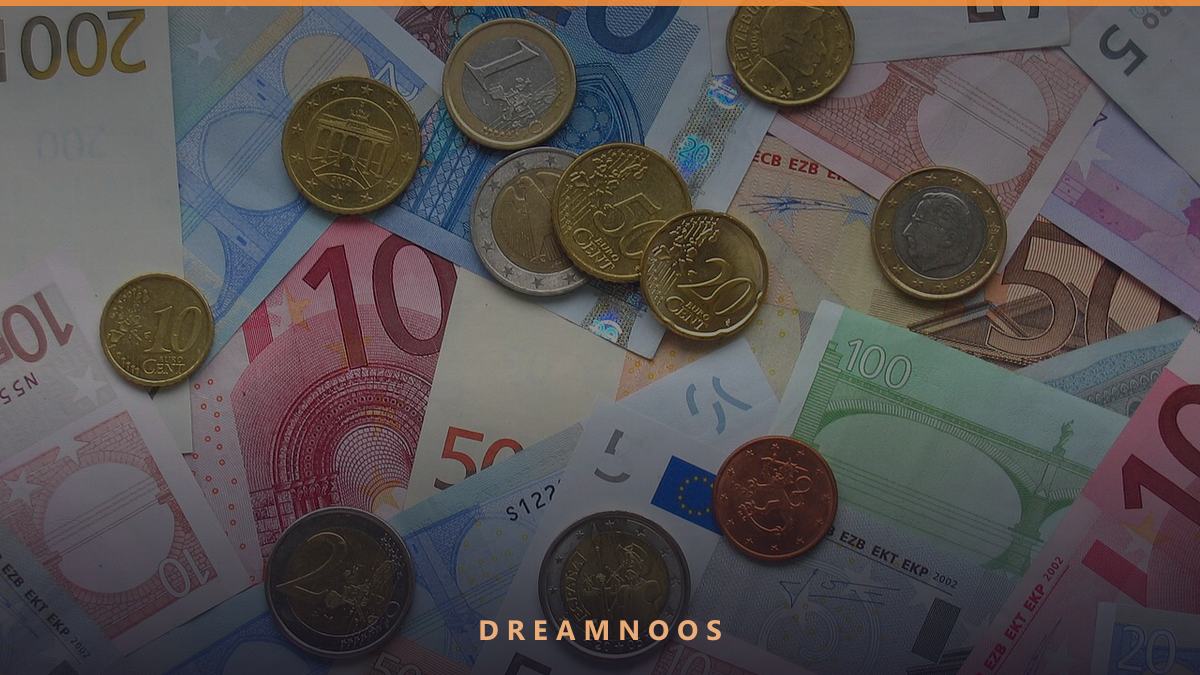
What money dreams mean (direct answer)
If you searched money dream meaning, finding money in dream, or losing money dream:
Money in a dream usually reflects your relationship with value — security, control, fairness, and self-worth — more than literal cash.
Finding money often tracks rising confidence or recovered resource; losing money tracks insecurity or strategy anxiety. Neither predicts lottery wins or bankruptcy.
What a money dream means
Money dreams stage evaluation periods: career shifts, debt concern, family obligations, status pressure. Large sums can symbolize emotional weight, not financial success.
What money represents in dreams
- Finding money — unexpected support, recovered value, rising confidence.
- Losing money — insecurity, leakage, strategy anxiety.
- Counting money — control, planning, resource tracking (or control anxiety if numbers shift).
- Stolen money — trust breach, unfair extraction.
- Giving money away — generosity, pressure, or guilt-driven overcompensation.
- Fake money — authenticity and trust concerns.
The psychology of money dreams
Money imagery frequently mirrors scarcity mindset, over-monitoring, and the question “How much am I worth in this system?” Recurring counting loops often track burnout and hyper-vigilance more than discipline.
Common money dream scenarios
Finding money on the ground dream meaning. Unclaimed potential, surprise support, confidence rebound.
Losing money dream meaning. Fear of loss, unstable planning — link losing money.
Counting money in dream meaning. Control need — orderly counting = planning; shifting numbers = anxiety loop.
Empty wallet when needed. Identity-security link — unprepared for demanded exchange.
Someone gives you money. Received help, obligation, or unclear intention from another.
Stealing or stolen money. Trust breach — who took what from whom?
Burning money. Rejection of value system or panic about waste.
Coins vs bills. Small repeated value vs consolidated larger stake.
Hidden cash discovered. Suppressed resource or unclaimed capability.
Receiving gold or cash with gold. Status-value concentration — prestige layer added.
Wealth dream with waking dread. Misaligned goals — outer success symbol, inner resistance.
Counterfeit or fake money. Trust and authenticity — “too good to be true” gain.
Inheritance money. Family lineage, duty, or unresolved estate emotion.
Paying a debt in dream. Obligation discharge — relief or resentment depending on tone.
Negative vs positive signals
Tilts cautionary: theft panic, compulsive counting, large sum with dread, recurring empty wallet.
Tilts neutral or positive: calm find, orderly giving, transparent exchange, gift received with gratitude.
Co-occurring symbols
- Money + gold — prestige-value layer (gold).
- Money + watch — time-value exchange pressure.
- Money + wealth state — identity-status cluster (wealth).
Islamic interpretation (Ibn Sirin summary)
No single fixed “money = riches” rule in classical Islamic dream literature — provision, trust, and moral responsibility frame wealth symbols. DreamNoos summarises descriptively:
| Dream detail | Common classical reading |
|---|---|
| Receiving lawful wealth calmly | Provision, opportunity, or test of gratitude |
| Losing wealth | Warning about waste, trust, or unstable circumstances |
| Counting or hoarding | Anxiety about provision or excessive attachment |
| Giving charity from dream wealth | Favourable — generosity and trust in provision |
| Stolen or doubtful money | Harm from betrayal or ethically unclear gain |
| Paper vs gold/coin | Material vs enduring value — gold often weighted more seriously |
For Islamic dream method broadly, see cultural dream guides.
How to read your money dream
- Gain, loss, or count? Action type names the anxiety lane.
- Calm or panic? Affect beats denomination.
- Who else appears? Giver/thief = relational trust theme.
- Waking finances or worth? Career evaluation often triggers these dreams.
- Fake, hidden, or burning? Authenticity and value-system questions.
What your money dream is telling you
Money dreams ask what you value, what you fear losing, and whether your inner ledger matches waking priorities.
Name one action (find/lose/count), one emotion, and one waking money-or-worth stressor.
Related: Gold · Wealth · Losing money · Lottery · Dream interpreter
Share Your Dream Experience
Had a similar dream? Share your experience or ask a question — comments appear after moderation.
No comments yet. Be the first to share your experience.