Street Art, Berlin, and Gentrification: Who Owns Public Space?
An exploration of Berlin's street art scene, its relationship to gentrification, and the contested politics of public space in a changing city.
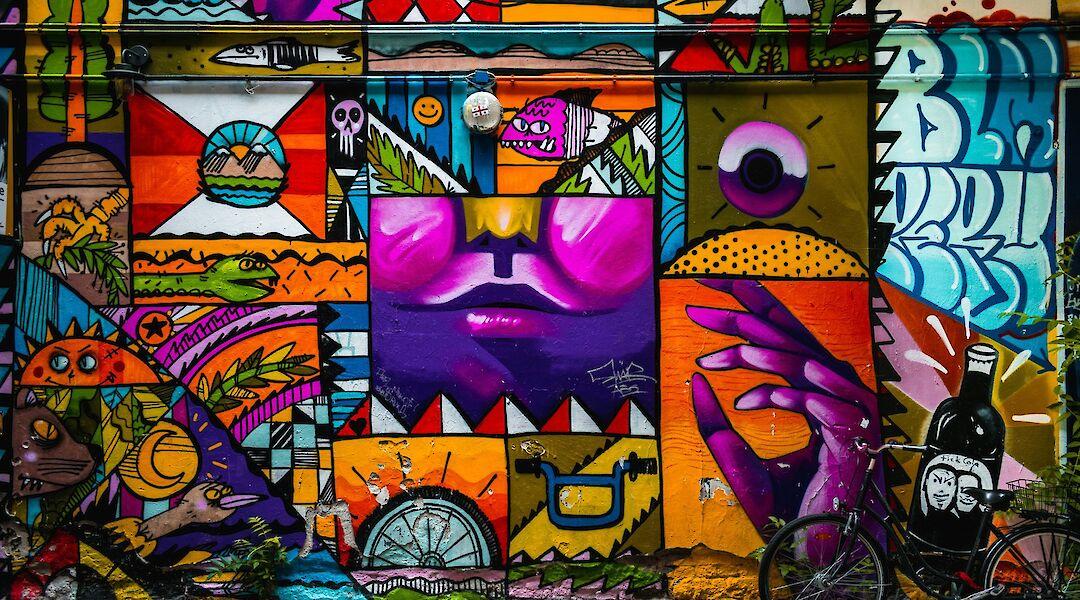
Street Art, Berlin, and Gentrification: Who Owns Public Space?
Berlin’s walls tell stories.
Graffiti tags, stencil pieces, murals, and wheatpaste posters cover building facades, bridge supports, and alleyways across the city. Some are commissioned and celebrated. Others are illegal and painted over within days. All of them claim space in a city that has been divided, reunified, rebuilt, and transformed.
Street art in Berlin is not just decoration. It is a conversation about who belongs in the city, who decides what public space looks like, and how culture is valued when neighborhoods change.
A city divided, then reunited
Berlin’s street art culture cannot be understood without the Wall.
From 1961 to 1989, the Berlin Wall divided the city. The western side became covered in graffiti—political statements, names, declarations of freedom. The eastern side remained largely blank, heavily guarded, and dangerous to approach.
When the Wall fell in 1989, the eastern side was quickly covered in celebration graffiti. In the years after reunification, abandoned buildings in East Berlin became canvases for artists. Empty factories, squatted buildings, and vacant lots offered space for experimentation.
The East Side Gallery—a preserved section of the Wall covered in murals—became one of the city’s most visited attractions. But it also marked the beginning of a tension that continues today: street art as heritage, and street art as transgression.
From squats to galleries
In the 1990s and early 2000s, Berlin was affordable. Artists moved to neighborhoods like Kreuzberg, Friedrichshain, and Mitte, drawn by low rents and empty spaces. Squatted buildings hosted galleries, clubs, and studios. Street art flourished in this environment of creative freedom and urban decay.
Some artists who began on the streets moved into galleries. Their work entered the art market. Murals that were once illegal became tourist attractions and photo backdrops.
This transition created a paradox: the very culture that made neighborhoods interesting and vibrant also helped make them desirable—and therefore more expensive.
Gentrification and displacement
As Berlin became more popular, rents rose. Neighborhoods that were once affordable for artists and working-class residents became unaffordable. Squats were legalized or evicted. Galleries, cafés, and boutiques replaced auto repair shops and corner stores.
Street art is caught in this shift.
On one hand, murals and graffiti signal creativity and edge—qualities that attract newcomers, tourists, and investors. Real estate listings sometimes use street art as a selling point. Neighborhoods with vibrant street scenes become “cool.”
On the other hand, the same process can displace the communities that created the culture. Long-time residents are pushed out by rising rents. The artists who painted the walls can no longer afford to live nearby.
Some residents see new murals as symbols of displacement. Others see them as expressions of resistance, claiming visibility in a changing city.
Legal walls, illegal tags, and everything between
Berlin’s approach to street art is inconsistent.
Some walls are designated as legal spaces where artists can paint without fear of arrest. These include sections of the East Side Gallery, certain courtyards in Kreuzberg, and designated “graffiti zones.”
Other walls are strictly protected. Painting without permission can lead to fines or criminal charges. Property owners may paint over unauthorized work overnight.
This patchwork of rules creates a constantly shifting landscape. A piece that exists today may be gone tomorrow. A legal wall may become illegal with a change in ownership.
Artists respond in different ways. Some seek permission and commissions. Others paint anonymously, working at night. Some create work designed to be temporary, knowing it will not last.
Public space and the right to the city
At its core, the debate over street art is about public space.
Who decides what a city wall should look like? Is public space for official messages—advertisements, government signage, corporate branding? Or is it also for residents, artists, and communities to express themselves?
The French philosopher Henri Lefebvre wrote about the “right to the city”—the idea that urban inhabitants should have a say in how their cities are shaped and used. Street art can be seen as an exercise of this right: a way of marking presence, claiming visibility, and participating in the visual life of the city.
But when street art becomes commodified—when it appears on luxury apartment buildings, in advertising campaigns, or on designer clothing—the politics become more complicated. Who benefits when rebel aesthetics are sold back to the public?
Berlin today
Berlin remains one of the world’s most important street art capitals.
The scene continues to evolve. New artists arrive. Old pieces disappear. Neighborhoods change. The conversation about who owns public space is never settled.
For visitors, the city’s walls offer an open-air museum of contemporary art and urban politics. For residents, they are a daily reminder of the city’s constant transformation—and of the questions that transformation raises.
Sources and Further Reading
- Berlin Senate Department for Culture — Urban Culture and Street Art.
- East Side Gallery Foundation — Preservation and history.
- Lefebvre, H. — The Production of Space (on the right to the city).
Editorial note: This article examines street art as a cultural and urban phenomenon. It does not endorse illegal graffiti or property damage.