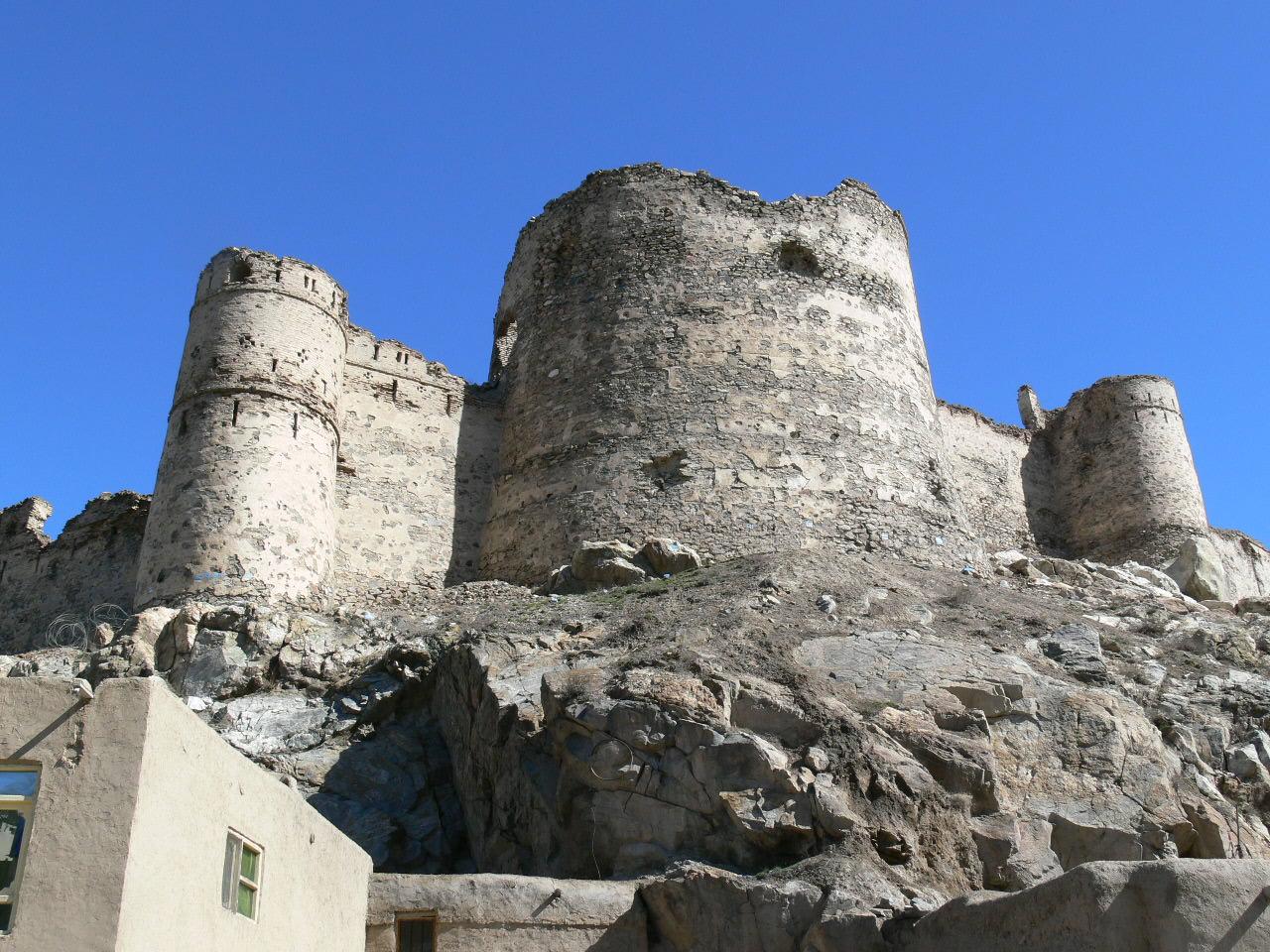
The last child left Yamada Elementary School in March. There were no graduates that year because there were no students. The school building still stands in the center of the village, its windows dark, its playground equipment rusting slowly under the rain.
This is not an isolated story. It is happening across rural Japan, town by town, school by school. The country’s population fell by more than 800,000 people in 2025, the largest annual decline on record. The births that year"fewer than 730,000"were the lowest since statistics began.
The government has announced plans. It has allocated money. It has created task forces. But in the villages where the decline is already visible, the response feels too small and too late.
The Numbers Are Abstract. The Emptiness Is Not.
Japan’s total population is now approximately 124 million, down from a peak of 128 million in 2008. The decline is accelerating. By 2040, the National Institute of Population and Social Security Research projects the population could fall below 110 million.
The aggregate figure does not capture what it looks like on the ground. In some rural prefectures, the population has already fallen by 30 percent or more since the 1990s. Entire villages have fewer than a hundred residents. The median age in some towns is over 65.
When a school closes, families with young children have no reason to stay. When a clinic closes, elderly residents cannot get care. When a bus route is canceled, people without cars become isolated. Each loss makes the next one more likely.
This is a demographic spiral, and it is already well underway in much of rural Japan.
What the Government Is Doing
Since 2014, Japan has had a “Regional Revitalization” (chiho sosaku) program. The goal is to encourage people to move from Tokyo to regional areas, to support local businesses, and to create jobs outside the major cities.
The budget for these programs runs into the hundreds of billions of yen. Subsidies are available for new businesses, for housing, for childcare. Some municipalities offer free land or vacant houses to newcomers.
But the results have been modest. Tokyo’s population continues to grow. Young people still move to the capital for university and jobs. The birth rate remains at 1.2 children per woman, far below the 2.1 needed to sustain a population without migration.
The government’s latest plan, announced in early 2026, includes more funding for remote work hubs, more support for seniors living alone, and expanded digital services for rural areas. These are useful measures. They do not address the fundamental question: if there are no children, no jobs, and no services, why would anyone move to a rural town?
The Tokyo Concentration
One reason rural revitalization has struggled is that Japan’s economy and infrastructure remain overwhelmingly concentrated in Tokyo. The capital region produces roughly one-third of the country’s GDP. Most major companies are headquartered there. Most universities are there. Most cultural institutions are there.
Young people from rural areas move to Tokyo for education and rarely return. Those who do come back often find that the jobs available do not match their qualifications or ambitions. The result is a one-way flow of people and talent from the regions to the center.
The government has talked about “supercity” projects and regional hubs, but these have not yet reversed the gravitational pull of Tokyo. Until that changes, rural towns will continue to lose their youngest residents.
What Disappears With a Town
When a rural town declines, what is lost is not just population. It is a way of organizing life.
Local festivals that have run for centuries lose participants and eventually stop. Neighborhood associations that checked on elderly residents dissolve. Farmers who maintained the landscape around rice paddies grow too old to continue, and the fields revert to scrub.
These losses are not easily measured in economic statistics, but they are real. They represent the erosion of community, of shared history, of the knowledge that comes from living in the same place for generations.
There is also a practical dimension. Abandoned houses"known as akiya"number in the millions across Japan. They become safety hazards, attract vermin, and reduce property values for remaining residents. Maintaining infrastructure"roads, water pipes, bridges"for a shrinking population becomes increasingly expensive per person.
Can Anything Be Done?
Some towns are trying. They are attracting remote workers, promoting tourism, converting empty schools into community centers or guesthouses. A few have seen modest success.
But these are exceptions. For most rural communities, the trends are structural and difficult to reverse. The birth rate is not going to rise quickly. Young people are not going to return in large numbers. The elderly population will continue to grow relative to the working-age population.
Japan’s rural decline is not a problem that can be solved with a subsidy program or a public relations campaign. It requires a fundamental rethinking of how the country organizes its economy, its infrastructure, and its social services for a society with fewer people.
The school in the village will not reopen. The question is what comes next for the people who remain.
Sources and Further Reading
-
Japan Ministry of Internal Affairs and Communications " Population Estimates (October 2026)
https://www.stat.go.jp/ -
National Institute of Population and Social Security Research " Population Projections for Japan (2023-2065)
https://www.ipss.go.jp/ -
Japan Ministry of Land, Infrastructure, Transport and Tourism " Regional Revitalization Program (2026)
https://www.mlit.go.jp/ -
World Bank " Population Ages 65 and Above, Japan (2026)
https://data.worldbank.org/ -
Reuters " Japan’s rural towns face extinction as population shrinks (2026)
https://www.reuters.com/world/asia-pacific/
Use original reporting and public data. Do not copy paragraphs from the sources.