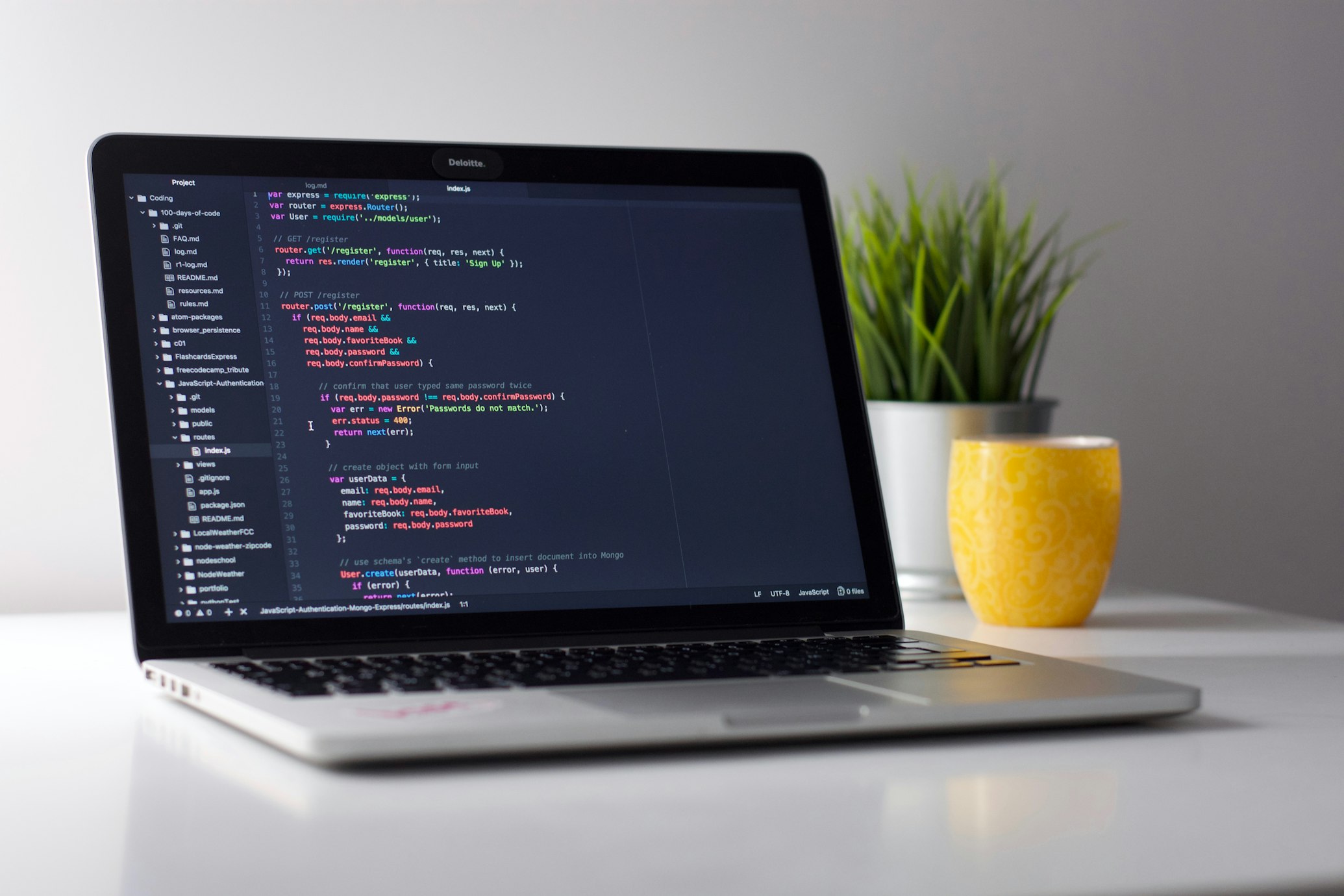
It started with a headache that would not go away. Not the kind that disappears after coffee and a dark room, but the dull, persistent pressure behind the eyes that comes from staring at a screen for ten hours a day, five days a week, for years.
Marcin left his job as a project manager at a logistics software company in Warsaw last spring. He did not have another job lined up. He did not have a burnout diagnosis from a doctor. What he had was a growing certainty that he could not spend another decade moving information from one screen to another.
He now installs hardwood floors. He is forty-two years old.
Marcin is not alone. Across Europe and North America, a quiet but measurable number of office workers are leaving knowledge-work jobs for careers in the physical trades"carpentry, electrical work, horticulture, masonry, flooring installation, bike repair. The numbers are not large enough to show up in national employment statistics yet, but they are large enough to be noticed by trade schools, apprenticeship programs, and the people who run them.
This is not a story about people fleeing the office because remote work ended. It is a story about what happens when digital work stops feeling like work and starts feeling like erosion.
The Fatigue Has a Name, but No Cure
There is a term for what many desk workers feel: digital fatigue. It is not the same as burnout, though the two overlap. Burnout is about exhaustion from overwork. Digital fatigue is about the specific quality of the work"endless notifications, fragmented attention, the pressure to be available at all times, the sense that nothing you produce is physically real.
A software engineer I spoke with described it as “moving pixels around.” A marketing coordinator said her days felt like “typing into a void.” A project manager in Berlin told me he could not remember the last time he made something he could touch.
The problem is not the computer itself. It is the removal of physical feedback. When you build a wall, you see the wall. When you fix a bicycle, the brakes either work or they do not. When you write an email or update a spreadsheet, the result is abstract. The feedback loop is delayed, mediated, and often invisible.
Over years, that abstraction takes a toll. People begin to wonder if their work matters in any concrete sense. Not in the “purpose-driven career” way that employers like to talk about, but in the simpler way: Did I make something? Did I fix something? Can I point to it and say, I did that?
What the Trades Are Seeing
Trade schools and apprenticeship programs are reporting something unusual: applications from people in their thirties and forties who already have degrees and established careers.
The Wrocław School of Building Trades in Poland saw applications from career-changers increase by about 40 percent between 2024 and 2026. A majority of those applicants came from office-based professions"IT, finance, administration. Similar patterns appear in German vocational schools and British apprenticeship schemes.
These are not people who failed at desk jobs. They are people who succeeded at them and decided they did not want the success anymore.
One instructor told me about a former accountant in his carpentry class. The man was in his late thirties, had a mortgage and two children, and was earning less as an apprentice than he had as a senior accountant. When asked why he made the change, he said: “I spent fifteen years making numbers move. I wanted to see what it felt like to make something that stays.”
There is a pride in physical work that does not depend on a job title. It is the pride of a floor laid straight, a pipe that does not leak, a garden that grows. It is immediate. It is verifiable.
The Money Is Worse, at First
No one should romanticize this. The trades pay less at the entry level than most knowledge-work careers. An apprentice carpenter earns a fraction of what a junior project manager makes. The work is harder on the body. Knees hurt. Backs ache. Weather matters.
There is also a social hierarchy that still favors white-collar work. Telling people you left a corporate job to lay floors invites questions. Some are curious. Some are polite. Some assume you could not hack it in the office.
For those who make the switch, the trade-off is clear: less money, more physical strain, and in return, a workday that ends when the work ends. No emails after dinner. No Slack messages at 10 p.m. No performance reviews based on metrics you cannot control.
Several people I interviewed described the same sensation after their first few months in a new trade: they slept better. Not because the work was easier, but because it was finite. You lay the floor. You clean up. You go home. The day is done.
What Employers Are Not Seeing
Companies that rely on knowledge workers are beginning to notice this trend, though few have named it. Exit interviews rarely cite “digital fatigue” as a reason for leaving. People say they want more flexibility, better pay, or a new challenge. Beneath those reasons is often something simpler: they are tired of screens.
Some companies have responded with “digital wellbeing” programs"meditation apps, no-meeting days, email-free Fridays. These can help, but they treat the symptom, not the condition. The condition is that much of modern office work has been distilled into a form that is cognitively draining and physically inert.
The people leaving are not asking for better ergonomic chairs. They are asking for work that involves their hands as well as their minds.
What Comes Next
This trend will not reverse the structure of the economy. There will still be more software developers than floor installers. The knowledge economy is not disappearing.
But the movement in the other direction"from screens to tools"says something about what people want from their working lives. It suggests that after two decades of digitizing everything, some workers are ready to touch the world again.
Marcin, the former project manager, finished his first solo flooring job last month. A two-bedroom apartment in a postwar block. Oak planks, herringbone pattern. When he was done, he ran his hand over the surface and felt no gaps, no uneven edges.
He sent a photo to his sister. She texted back: It looks real.
He told me that was the first compliment about his work that mattered in years.
Sources and Further Reading
-
European Centre for the Development of Vocational Training (Cedefop) " Adult Learners in Vocational Education and Training (2026)
https://www.cedefop.europa.eu/ -
German Federal Institute for Vocational Education and Training (BIBB) " Career Changers in Apprenticeships (2025-2026)
https://www.bibb.de/ -
American Psychological Association " Work and Well-being Survey 2026: Digital Fatigue and Remote Work
https://www.apa.org/topics/work-well-being -
UK Office for National Statistics " Occupational Transitions: White-Collar to Skilled Trades (2026)
https://www.ons.gov.uk/ -
Wrocław School of Building Trades " Annual Report on Applicant Demographics (2026)
https://www.budowlana.wroc.pl/
Interviews conducted independently. Names and some details changed to protect privacy.