
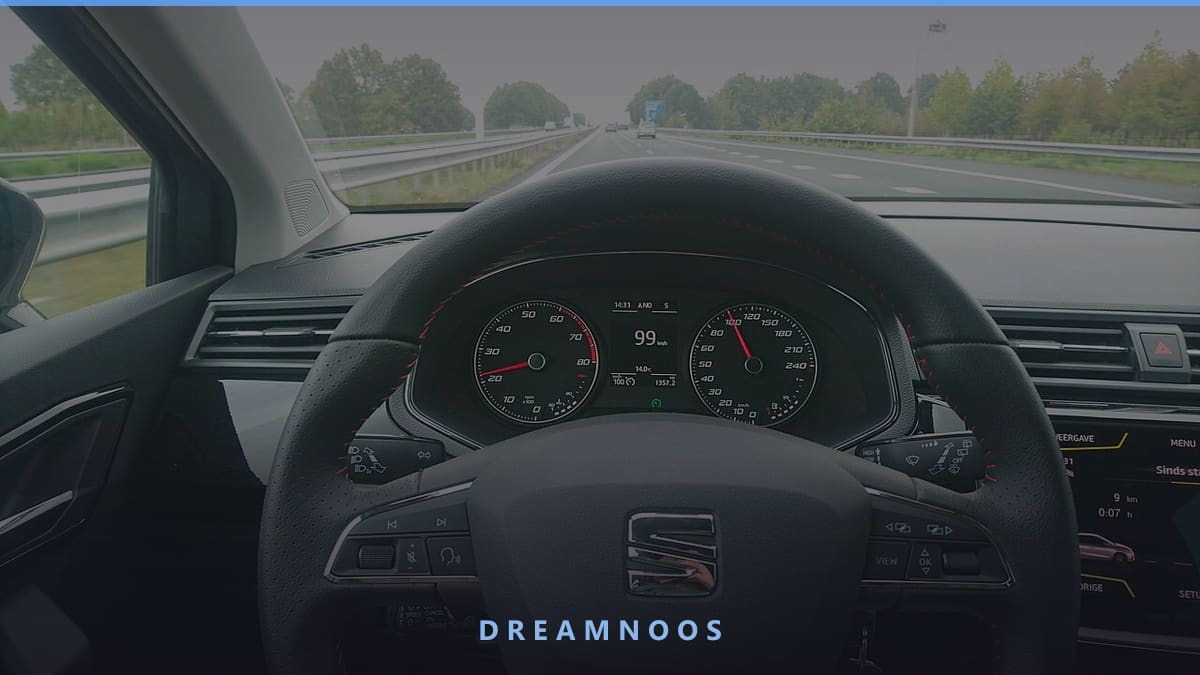
What a car dream means
Car dreams are trajectory dreams. They typically describe how the dreamer steers life choices under time and pressure.
Classical readings of car dreams
Classical systems use transport symbols to represent movement quality, responsibility, and outcome risk under control.
Car symbolism
- Driving -> active agency.
- Passenger seat -> reduced control.
- Brake failure -> urgency without governance.
The psychology of car dreams
Car imagery often appears in transition periods, deadline stress, and identity acceleration cycles.
How context changes a car dream
- Night driving: reduced certainty.
- Traffic jam: blocked momentum.
- Parked car: intentional pause or stagnation.
Positive/negative interpretation conditions
Positive lane strengthens with stable navigation and clear destination. Cautionary lane strengthens with crashes, panic, wrong turns, or mechanical failure.
Common car dream scenarios
- Driving fast.
- Losing control.
- Searching for parked car.
- Car not starting.
Non-obvious interpretive insights
- Driver seat ownership is often more meaningful than speed.
- Brake quality symbolizes boundary regulation.
- Repeated wrong turns can signal value misalignment.
- Empty roads may indicate autonomy but also isolation.
- Passenger conflict scenes map relational power struggles.
- Fuel shortage often reflects emotional resource depletion.
- Car model/status symbols may indicate reputation pressure.
- Reverse driving can signify unresolved past pull.
Emotional branching
- Car + confidence -> aligned direction.
- Car + fear -> consequence anxiety.
- Car + anger -> reactive decisions.
- Car + relief -> regained control.
High-intent variants (micro-intent map)
- Driving car dream meaning.
- Car accident dream meaning.
- Car not starting dream meaning.
- Lost car dream meaning.
- Fast driving dream meaning.
- Brake failure dream meaning.
Comparative cultural lens
- Islamic ethics lens: responsibility in movement and consequence.
- Jungian lens: ego navigation and self-direction.
- Christian lens: stewardship, pacing, and moral route.
- Persian civic lens: status movement and social trajectory.
Observed recurring patterns
- Recurring brake-failure dreams are frequently reported during overload periods.
- Repeated lost-car dreams often appear during identity-role confusion.
- Night-driving motifs commonly cluster around uncertain transitions.
Common co-occurring symbols
- Car + road: chosen trajectory and commitment.
- Car + fuel: energy reserves and sustainability.
- Car + traffic lights: pacing, restraint, and permission timing.
Interpretive contradictions
- Fast-driving dreams are not always positive; speed can hide strategic drift.
- Car-breakdown dreams are not always negative; they can force needed recalibration.
Source-anchored notes
- Cross-tradition transport symbols generally track responsibility and direction rather than literal travel prediction.
- Contemporary analysis emphasizes self-regulation, pacing, and agency under complexity.
Entity psychology — car
Core symbol — car anchors the dream’s central metaphor. Context first — Setting and emotion around car beat generic glossaries. Role in scene — Witness, victim, tool, or background car changes weight. Waking link — Recent news, media, or memory featuring car primes fairly. Agency — Whether you act on car or watch passively. Repeat visits — Same car returning marks unresolved theme—not omen.
Traits to track: instinct, wild mirror, unclassified creature.
What car represents in dreams
- Core car symbol — Your waking associations to car anchor the read before any glossary.
- Setting layer — Home, travel, work, or nature calibrates tone and scale.
- Your role — Witness, cause, rescuer, or fugitive shifts agency.
- Emotion on waking — Fear, grief, relief, or shame tilts integration vs avoidance.
- Vs cluster links — Compare related hub pages in your graph—not interchangeable symbols.
Extended psychological read
Repeat Car in a Dream: persistent car theme marks unfinished feeling—name the week’s trigger before spiral interpretation.
Car dreams across cultures and traditions
Spiritual readings of car dreams emphasise symbolic transition and inner meaning rather than literal prediction. DreamNoos records this descriptively for readers who already think in those terms.
Classical dream manuals emphasize context over isolated symbols; combine tradition as metaphor library with waking facts you already know.
More car dream scenarios
Calm after fear of car. Regulation arc in one dream.
You search for car. Active missing theme.
You act on car. Agency tilts repair vs avoidance.
Return to same car next night. Repeat motif—not prophecy.
Car changes form. Symbol shift mid-dream—track sequence.
Someone else holds car. Compare their role to yours.
Car in wrong setting. Context dissonance calibrates read.
Night after media with car. Priming fair—name source.
Stranger car in crowd. Projection—social mirror.
Absurd car detail. Rule-break may flag waking desire for change.
Negative signals vs positive signals
| Tone | Example | Likely meaning |
|---|---|---|
| Heavy | Frozen before car | Paralysis fair to name |
| Heavy | Public damage to car | Shame or exposure |
| Light | Gentle contact with car | Repair possible |
| Light | Humor around car | Distance from fear |
How to read your car dream
- Name the setting — Where car appeared and who watched.
- Your action — Did you tend, flee, fix, or only observe car?
- Waking emotion — Fear, grief, relief, or shame on waking.
- Recent car link — Media, conversation, or memory this week.
- One line journal — What {attr} changed about car in scene.
More car dream questions
Vs similar symbols? Car psychology differs from swap-in entities—use cluster contrasts.
Childhood memory of car? Personal history outweighs generic omen lists.
Nightmare vs curious dream? Waking emotion calibrates threat, not dictionary alone.
Recurring car? Track one waking theme per week—pattern over single night.
What your car dream is telling you
Name one role you played, one emotion on waking, and one waking link to car. Revisit cluster pages when car repeats—integration beats prophecy spiral.
Snippet-oriented recap
Car dreams map instinct, wild mirror, unclassified creature through scene context. Link related hub entries—not fixed omen gloss alone.
Share Your Dream Experience
Had a similar dream? Share your experience or ask a question — comments appear after moderation.
No comments yet. Be the first to share your experience.