
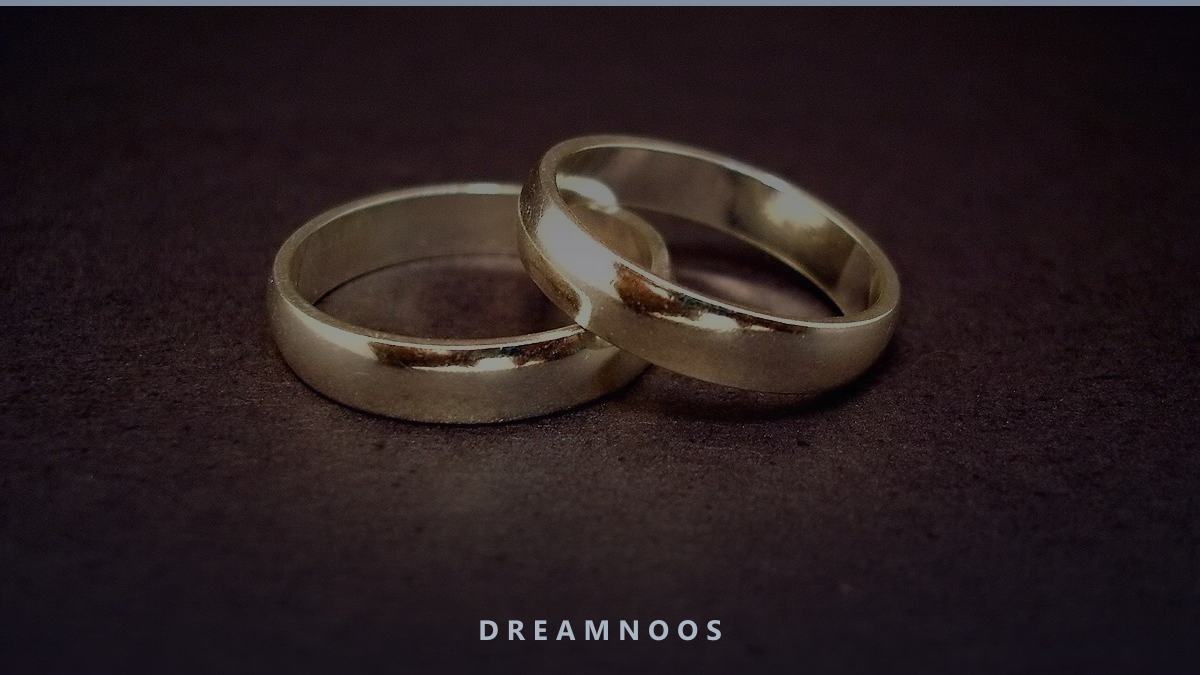
What a spouse dream means
Spouse dreams are relationship-mirror symbols.
They usually reflect bond quality, trust regulation, and how responsibilities are being shared.
Spouse symbolism
- Calm interaction: relational stability and secure attachment.
- Repeated arguments: unresolved communication pressure.
- Distance from spouse: emotional disconnection or protective space.
- Reconciliation scene: repair potential and renewed alignment.
Classical readings of spouse dreams
Classical family-oriented readings often interpret spouse symbols through duty, harmony, and household balance.
Scene tone and behavior determine whether the dream leans reassurance or warning.
The psychology of spouse dreams
Psychologically, spouse dreams frequently process expectations, vulnerability, and fear of loss or betrayal.
They can also represent your internal model of partnership rather than only literal partner behavior.
How context changes a spouse dream
- Spouse in home setting: daily relational dynamics.
- Spouse in public setting: social identity of the relationship.
- Unknown spouse figure: projected commitment themes.
- Former spouse imagery: unresolved bond memory.
Positive/negative interpretation conditions
Positive lane strengthens when mutual recognition, calm, and repair are present.
Cautionary lane strengthens when contempt, avoidance, or repeated distrust dominates.
Observed recurring patterns
- Recurring argument dreams often map to communication backlog.
- Reunion-with-spouse motifs frequently appear during reconciliation attempts.
- Silent-spouse scenes can indicate emotional withholding or fear of conflict.
Common co-occurring symbols
- Spouse + ring: commitment contract and role expectations.
- Spouse + house: shared system and domestic balance.
- Spouse + journey: partnership under transition stress.
Interpretive contradictions
- Conflict dreams are not automatic predictions; often they are processing tools.
- Pleasant spouse dreams can still surface unresolved dependency dynamics.
Source-anchored notes
- Traditional interpretation links spouse symbols with harmony, duty, and household order.
- Contemporary frameworks read spouse dreams through attachment and communication patterns.
Entity psychology — spouse
Social mirror — spouse reflects role, status, or shadow in others. Known vs type — Specific person vs archetypal spouse figure changes read. Power balance — Who leads, follows, or threatens in the spouse scene. Projection — Traits you assign to spouse may be disowned self. Work vs home — Context around spouse separates professional and private. Emotional charge — Attraction, rivalry, or indifference toward spouse primes tone.
Traits to track: instinct, wild mirror, unclassified creature.
What spouse represents in dreams
- Core spouse symbol — Your waking associations to spouse anchor the read before any glossary.
- Setting layer — Home, travel, work, or nature calibrates tone and scale.
- Your role — Witness, cause, rescuer, or fugitive shifts agency.
- Emotion on waking — Fear, grief, relief, or shame tilts integration vs avoidance.
- Vs cluster links — Compare related hub pages in your graph—not interchangeable symbols.
Extended psychological read
Spouse in a Dream reflects role, projection, or status in others—spouse as person may be known, type, or stranger archetype. presence adds wild mirror; power balance in scene beats generic social stress.
Spouse dreams across cultures and traditions
Stranger vs known figure splits archetype from biography—classical crowd scenes warn of public opinion; modern read adds workplace hierarchy and social comparison.
More spouse dream scenarios
Spouse leaves without goodbye. Abandonment fear fair to name.
Spouse ignores you. Rejection or autonomy—your role in scene.
Child version of spouse. Memory or regression layer.
Deceased spouse appears. Grief or message exception—culture matters.
Known spouse acts out of character. Relationship tension or projection.
Reunion with spouse. Longing or closure—emotion on waking leads.
Spouse needs help. Caretaker role activation.
Crowd with spouse center. Social mirror—public opinion theme.
You become spouse. Role identification or shadow integration.
You argue with spouse. Unspoken conflict surfacing.
Negative signals vs positive signals
| Pattern | In dream | Waking link |
|---|---|---|
| Loop | Same spouse returns | Unfinished theme |
| Spike | Sudden {attr} on spouse | Recent stress fair |
| Drop | spouse vanishes | Avoidance or release |
| Shift | spouse transforms | Identity change read |
How to read your spouse dream
- Familiar or archetype — Known spouse vs stranger figure.
- Intensity — Mild unease vs full panic around spouse.
- Agency check — Could you influence spouse or frozen?
- Contrast hub — How this differs from plain spouse dreams.
- Next step — One waking boundary or care act tied to symbol.
More spouse dream questions
Vs similar symbols? Spouse psychology differs from swap-in entities—use cluster contrasts.
Childhood memory of spouse? Personal history outweighs generic omen lists.
Nightmare vs curious dream? Waking emotion calibrates threat, not dictionary alone.
Recurring spouse? Track one waking theme per week—pattern over single night.
What your spouse dream is telling you
Name one role you played, one emotion on waking, and one waking link to spouse. Revisit cluster pages when spouse repeats—integration beats prophecy spiral.
Snippet-oriented recap
Spouse dreams map instinct, wild mirror, unclassified creature through scene context. Link related hub entries—not fixed omen gloss alone.
Share Your Dream Experience
Had a similar dream? Share your experience or ask a question — comments appear after moderation.
No comments yet. Be the first to share your experience.