
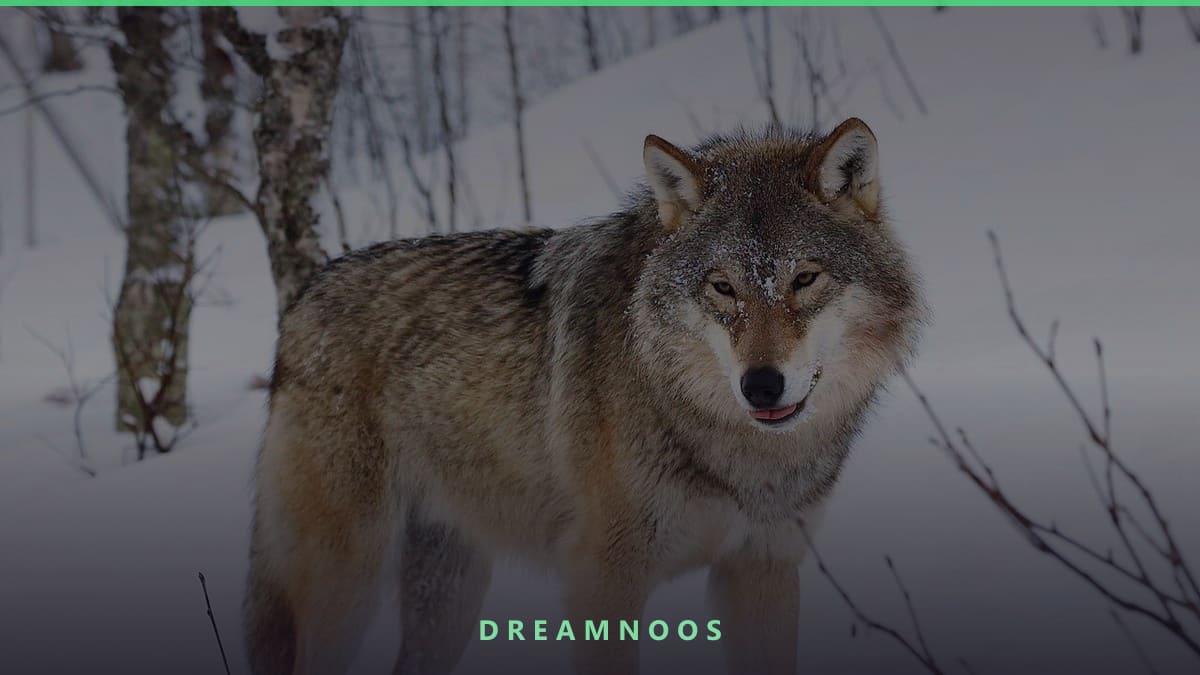
What a wolf dream means
A wolf in a dream usually occupies two lanes: coordinated outside threat (pack at the door) or unintegrated instinct (lone wolf in forest you do not flee). Hybrid dreams—wolf becomes colleague, wolf watches from billboard—mean the symbol is processing a role, not census-reporting animals. Searchers ask “wolf dream meaning,” “wolf pack dream,” or “wolf chasing me” during trust crises, leadership stress, or after wilderness media. Snippet summary: wolf dreams ask whether danger is social and hidden, or wildness inside you seeking respect. Compare chased-by-wolf for pursuit plots, wolf-attack for contact harm, dog for domestic loyalty contrast.
What wolf represents in dreams
Discriminate wolf behavior before symbol dictionaries: hunting, accompanying, howling, sleeping, injured. A sleeping wolf may mean dormant conflict; an injured wolf may mean rival already weakened. Your response—run, fight, feed, watch—usually tells the interpretive lane faster than fur color.
- Pack threat — gossip coalition, office bloc, family siding against you.
- Lone wolf — independence pride, isolation, or solo competitor.
- Guide — traveling with wolf; indigenous and depth frames as teacher.
- Territory — marking boundaries; defended identity.
- Hunt stamina — problem you cannot outrun by busyness alone.
- Moonlit forest — liminal change; night rumination.
The psychology of wolf dreams
Artemidorus-style discrimination still helps: distance, pursuit, pack size. Clinical framing treats wolf as projection vessel—name waking rival or fear before omen reading. Trauma after real wildlife encounter deserves separate care.
Jungian readers may see wolf as instinct not domesticated—positive when you stand present, negative when you flee or dominate excessively. Adolescents dreaming wolves during identity formation is common—not pathology. Video games and fantasy novels prime wolves heavily; lower symbolic weight if plot copied fiction exactly.
Wolf symbolism
- Howl — announcement; something demands acknowledgment.
- Gray fur blending snow — camouflaged threat or hidden skill.
- Alpha stare — authority challenge; manager or parent figure.
- Wolf eyes in crowd — one person watched differently.
- Feeding wolf by hand — risky trust; integrating dangerous ally.
Wolf dreams across cultures and traditions
Greek and Roman literature often read wolf as enemy at edge of city. Turkish and Central Asian epics sometimes honor wolf as tribal sign—positive pride lane for some dreamers. Game of Thrones and similar media overprime direwolf loyalty—note fiction priming before applying to workplace enemies. Islamic classical sources sometimes map wolf near home to hidden foe—ethical modern use avoids accusing individuals based on dreams. Indigenous North American traditions may honor wolf as clan ancestor—do not appropriate specific nation stories into universal rules; note respect. European fairy tales (wolf in grandmother’s bed) prime deception frame. Modern “lone wolf” violence headlines can contaminate dreams with news anxiety—sociological, not personal moral verdict.
Common wolf dream scenarios
Pack circles car on snowy road. Mob anxiety; commute isolation.
Lone wolf sits while you pass. Instinct acknowledged without chase.
Wolf in kitchen at night. Domestic threat; compare house if appeared.
You become wolf. Identity shift; aggression or freedom fantasy.
Wolf fights dog. Civilized loyalty versus wild strategy.
Child protected by wolf. Protector archetype; fierce boundary for dependents.
Hunter aims at wolf you pity. Moral conflict about necessary aggression.
Wolf speaks human language. Message from instinct or enemy named.
Moon full, wolves howl. Collective emotional night; social media pile-on echo.
Wolf leads you through fog. Guide plot; trust the unknown path.
Trap catches wolf; you regret. Suppressed instinct or harsh judgment on rival.
Wolf at office cubicle absurd mashup. Workplace predator metaphor.
Skinwalker fear residue. Cultural horror media—note priming.
Wolf and snake same dream. Dual hidden-threat symbols.
Chase becomes chased-by-wolf page depth. Flight emphasis.
Wolf watches you eat. Resource guarding; scarcity at table metaphor.
Rancher warns about wolves. Community rumor week.
You feed wolves from truck. Controversial alliance; ethics of “feeding” harmful people.
Snow tracks circle tent. Camping anxiety; wilderness trip priming.
Wolf transforms into colleague. Personification of threat—do not accuse awake without evidence.
Husky mistaken for wolf. Breed priming lowers omen weight.
Negative signals vs positive signals
| Category | Examples in the dream | Typical interpretive read |
|---|---|---|
| Negative | Pack invasion, bite, pursuit in home | Coordinated threat, boundary breach—see wolf-attack |
| Negative | Dominant wolf humiliates you | Power imbalance; bullying |
| Negative | Rabid foam | Fear contagion; health anxiety |
| Positive | Calm lone wolf, shared path | Instinct integration; courage |
| Positive | Wolf warns before cliff | Protective instinct |
| Positive | Pack retreats when you stand ground | Boundary success |
Wolf dream questions
Wolf pack always enemy?
Often social pressure; rare dreams show protective pack.
Female wolf with cubs?
Maternal ferocity; defend boundaries of dependents.
White wolf spiritual?
Optional purity/guide frame; not required.
Killing wolf guilt?
May map suppressing instinct or defeating rival—check waking ethics.
Difference from wolf-attack?
Attack emphasizes harm contact; this page holds broader wolf presence.
Recurring wolf?
Chronic trust issue or unintegrated anger—journal triggers.
Wolf howl only, no body?
Alarm without visible enemy—name the rumor you fear.
Baby wolf?
Nascent threat or instinct; do not minimize if trend grows.
Wolf in sheep’s clothing idiom dream?
Deception fear; verify waking facts before accusations.
Snippet-oriented recap
Wolf dreams typically symbolize hidden enemies, pack-like social pressure, wild instinct, or guide archetypes—with pack scenes stressing coordination and lone calm wolves stressing integration. House interiors intensify threat; forest companionship softens it. Link chased-by-wolf, wolf-attack, dog.
What your wolf dream is telling you
Record pack versus lone, pursuit versus walk together, setting wild versus domestic, your action. Waking: one boundary conversation if coalition pressure matched; therapy if fear is intrusive. Canine wilderness cluster supports informational SEO without naming real people as “wolves” from sleep alone. If pack chased you but you reached a door, note whether that door was work, home, or therapist office—the refuge type clarifies the stress domain. Lone wolf at a respectful distance often marks a skill you are afraid to use—assertion, solitude, creative ferocity—rather than an enemy to eliminate. Write one sentence naming the person or role the wolf might represent before sharing the dream with others.
Share Your Dream Experience
Had a similar dream? Share your experience or ask a question — comments appear after moderation.
No comments yet. Be the first to share your experience.