
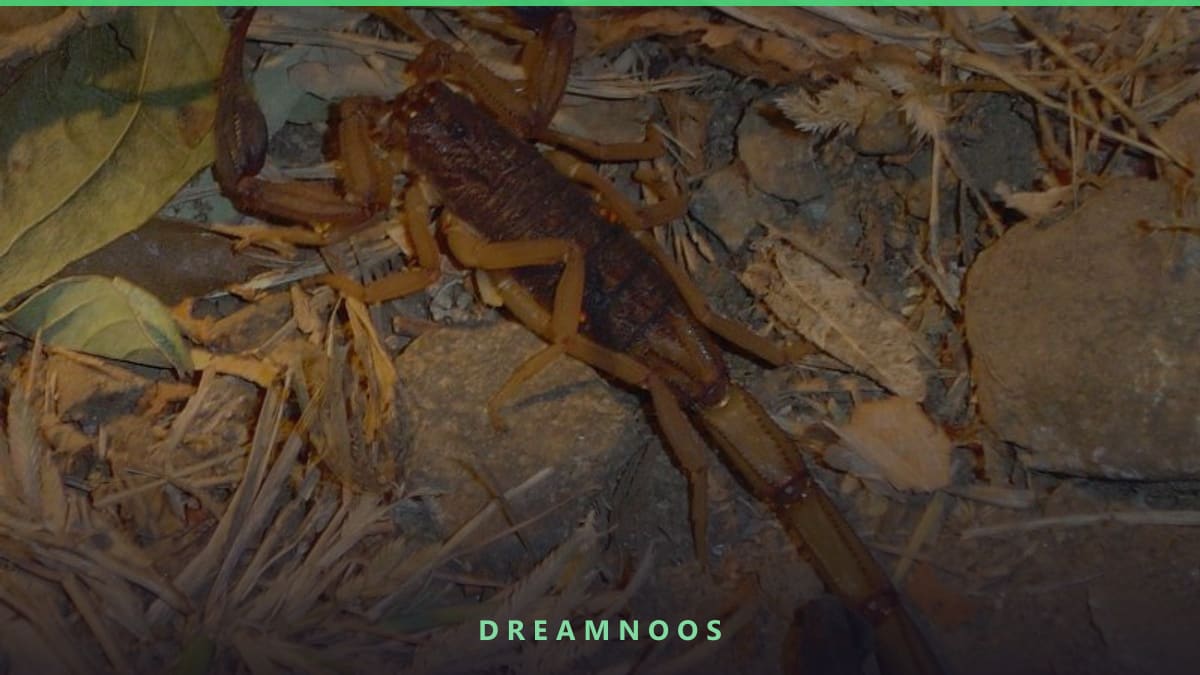
What a killing a scorpion dream means
Killing a scorpion is a decisive-image dream: the hidden, venom-close threat meets force. Unlike abstract “stress dreams,” this one usually names a target: something small that could ruin a week if ignored. Anxiety and betrayal tags often mean you have been operating near someone—or some habit—that does not fight fair.
Classical readings of killing a scorpion dreams
Classical creature-killing symbolism tends to reward proportion: remove genuine danger, do not cultivate cruelty. Scorpions carry desert logic: concealment, patience, sudden strike. Killing one can read as ending a waiting game you could not win by politeness alone.
Dream mechanics focus
- Weapon vs shoe: improvised defense vs prepared boundary—how resourced you feel.
- Number of strikes: indecision vs overkill—moral self-audit embedded in motion.
- Gore level: high gore sometimes tracks rage discharge; clean kill can track clarity.
- Witnesses: shame, pride, or teaching moments about how you handle threat.
Killing a Scorpion symbolism
- Stomp: blunt refusal; fast boundary.
- Trap and poison: strategic mind—sometimes coldness the dream approves cautiously.
- Scorpion in a jar killed: controlled confrontation; delayed justice.
- Killing then burying: desire to hide aggression from self-concept.
The psychology of killing a scorpion dreams
Relief after killing often signals permission to protect yourself after hyper-vigilance. Shame after killing can signal identification with the scorpion—you recognize your own sting—or empathy for a person mapped onto the creature.
High-intent variants (micro-intent map)
- Kill scorpion in bed: intimacy-zone threat removal; boundary with partner or past.
- Kill scorpion at work desk: politics; “small” enemy with real venom.
- Kill scorpion while child watches: modeling aggression; fear of teaching the wrong lesson.
- Scorpion splits into two: hydra logic—one conflict spawns another.
- Kill with bare hands: raw agency; cost to skin and calm.
- Fail to kill: fear that defenses are insufficient—return to scorpion-bite cluster readings.
How context changes a killing a scorpion dream
- Desert night: isolation amplifies moral loneliness after violence.
- Garage or basement: domestic underside—problems you keep off the guest list.
Non-obvious interpretive insights
- Someone hands you the tool can mean delegated aggression—are you the arm or the will?
- Photographing dead scorpion can map to proof-seeking in disputes.
- Selling dead scorpion (absurd) can mean trying to profit from survival story—identity risk.
Observed recurring patterns
- Frequently reported after ending toxic friendships, leaving hostile jobs, or blocking harassers.
- Recurring kill-and-return scorpion dreams can track OCD reassurance loops or unresolved legal fights—mundane persistence matters.
- Some desert-region dreamers report seasonal spikes—environmental priming.
Common co-occurring symbols
- Scorpion + sand: concealment and delayed recognition.
- Scorpion + foot: path and mobility under threat—where you step next.
- Scorpion + house: domestic threat surfaces.
Interpretive contradictions
- Killing is not always strength; sometimes the dream asks whether avoidance was possible earlier.
- Mercy toward a scorpion is not always virtue; sometimes it is denial dressed as spirituality.
Positive/negative interpretation conditions
Positive lanes favor clean resolution, relief without gloating, safety for dependents. Cautionary lanes favor gleeful cruelty, repeated killing scenes, or killing the wrong creature—misdirected anger.
Source-anchored notes
Creature-threat manuals emphasize behavior and proximity over species taxonomy; the interpretive bridge remains risk, concealment, and aftermath.
Real-world interpretation boundary
If you live where venomous scorpions are common, education and home safety matter; dreams supplement, not replace, precautions.
Entity psychology — killing scorpion
Instinct mirror — killing scorpion carries instinct your psyche projects onto a living symbol. Bond type — Wild, domestic, or liminal killing scorpion shifts whether the dream feels relational or archetypal. Movement read — Flight, chase, stillness, or sound from the killing scorpion tilts fear vs awe. Scale of threat — Size and teeth/claws (or their absence) calibrate vulnerability vs power. Human relation — Pet, predator, herd member, or pest—your role toward killing scorpion matters. Ecology hint — Habitat in the dream (home, forest, water) grounds the killing scorpion in waking context.
Traits to track: instinct, wild mirror, unclassified creature.
What killing a scorpion represents in dreams
- Core killing scorpion symbol — Your waking associations to killing scorpion anchor the read before any glossary.
- Setting layer — Home, travel, work, or nature calibrates tone and scale.
- Your role — Witness, cause, rescuer, or fugitive shifts agency.
- Emotion on waking — Fear, grief, relief, or shame tilts integration vs avoidance.
- Vs cluster links — Compare related hub pages in your graph—not interchangeable symbols.
Extended psychological read
When Killing a Scorpion in a Dream repeats, track one waking week: did killing scorpion appear in media, argument, or health talk? The dream maps emotion about that bond; presence marks intensity, not prophecy.
Killing a Scorpion dreams across cultures and traditions
Folk traditions often assign moral or omen weight to animals, but personal bond and behavior in the dream outweigh generic catalogs. Classical bestiaries treated creatures as mirrors of temper—loyalty in dog, pride in lion, cunning in fox—while modern ecology adds habitat loss undertones for some dreamers.
More killing a scorpion dream scenarios
Killing Scorpion changes size. Threat vs awe—scale shifts before meaning.
You feed killing scorpion. Care bond or instinct meeting routine.
Pack or flock of killing scorpion. Belonging or overwhelm—count and noise calibrate.
You search for lost killing scorpion. Missing bond or responsibility theme.
Stranger controls killing scorpion. Projection—who holds the symbol in waking life?
Dead killing scorpion that moves. Rule break—symbol shifts from ended to uncanny.
Killing Scorpion approaches slowly. Trust or threat—pace matters more than species lore.
Child with killing scorpion. Innocence meets instinct—protector read.
Killing Scorpion speaks or looks at you. Message dream—note emotion on eye contact.
Killing Scorpion injured but alive. Complicated hope—function crippled, not ended.
Negative signals vs positive signals
| Tone | Example | Likely meaning |
|---|---|---|
| Heavy | Frozen before killing scorpion | Paralysis fair to name |
| Heavy | Public damage to killing scorpion | Shame or exposure |
| Light | Gentle contact with killing scorpion | Repair possible |
| Light | Humor around killing scorpion | Distance from fear |
How to read your killing a scorpion dream
- Name the setting — Where killing scorpion appeared and who watched.
- Your action — Did you tend, flee, fix, or only observe killing scorpion?
- Waking emotion — Fear, grief, relief, or shame on waking.
- Recent killing scorpion link — Media, conversation, or memory this week.
- One line journal — What {attr} changed about killing scorpion in scene.
More killing a scorpion dream questions
Vs similar symbols? Killing Scorpion psychology differs from swap-in entities—use cluster contrasts.
Childhood memory of killing scorpion? Personal history outweighs generic omen lists.
Nightmare vs curious dream? Waking emotion calibrates threat, not dictionary alone.
Recurring killing scorpion? Track one waking theme per week—pattern over single night.
What your killing a scorpion dream is telling you
Name one role you played, one emotion on waking, and one waking link to killing scorpion. Revisit cluster pages when killing scorpion repeats—integration beats prophecy spiral.
Snippet-oriented recap
Killing Scorpion dreams map instinct, wild mirror, unclassified creature through scene context. Link related hub entries—not fixed omen gloss alone.
Share Your Dream Experience
Had a similar dream? Share your experience or ask a question — comments appear after moderation.
No comments yet. Be the first to share your experience.