
15,000 Years Ago, People Were Already Making Art With Clay " And Children Were Part of It
Long before pottery became part of everyday life, people were already discovering what they could do with clay.
They shaped it, pressed it, decorated it and turned it into small representations of the world around them. Some of these creations looked like birds. Others represented animals or human figures. They were not cooking vessels or storage containers. They were objects made to represent something.
A study published in PLOS ONE on November 11, 2026, offers new evidence that this kind of figurative art was already an established tradition in the southern Levant between approximately 15,000 and 11,650 years ago.
Researchers examined 154 figurative clay objects from three archaeological sites in present-day Israel. Perhaps the most revealing evidence was not simply the shapes of the objects, but the fingerprints left behind by the people who made them.
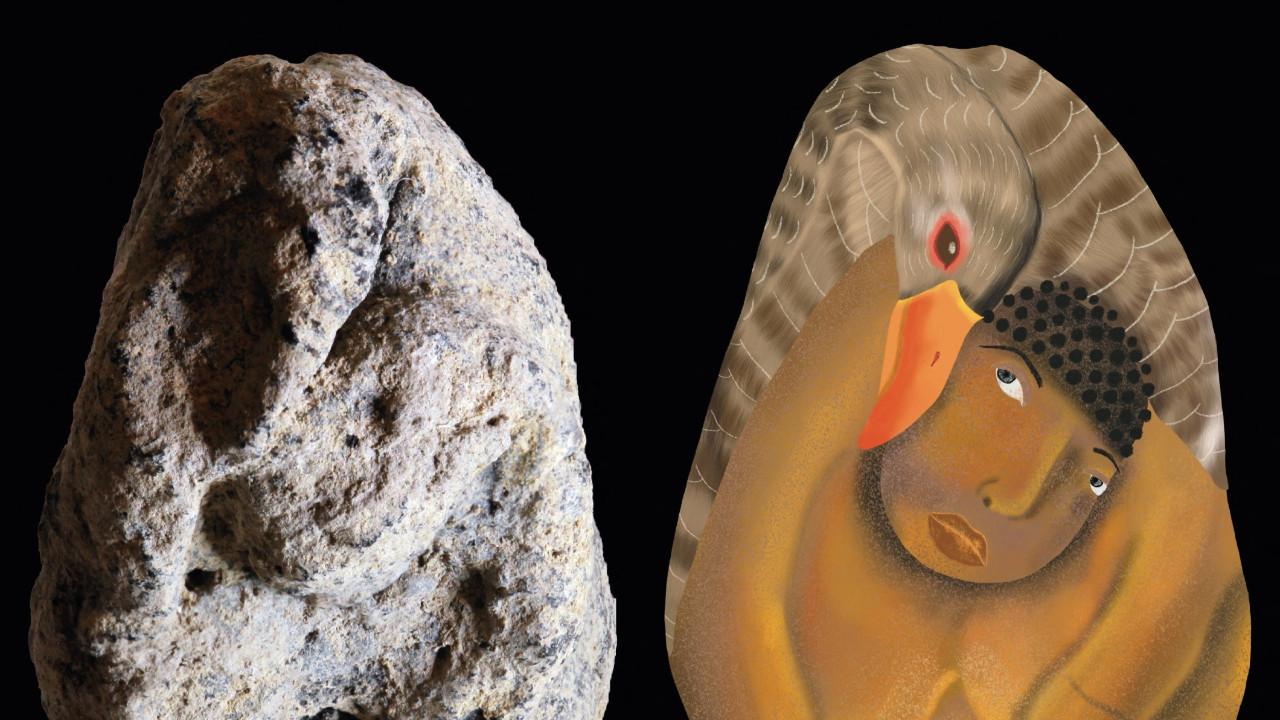
One figurine carries the impression of an adult fingerprint overlapped by a child’s. That small detail offers a rare glimpse into how practical knowledge and creative traditions may have passed between generations in prehistoric communities.
The findings challenge the assumption that symbolic clay modelling in this region emerged mainly alongside farming and the Neolithic agricultural revolution.
Art Before the Age of Pottery
The objects belong to the Natufian period, a time when communities in the Levant were increasingly settling in permanent or semi-permanent villages while continuing to rely heavily on hunting, fishing and gathering.
These communities lived thousands of years before agriculture became the dominant economic system in the region.
For a long time, archaeologists associated the widespread use of clay for symbolic objects in Southwest Asia with later Neolithic societies. The emergence of farming, permanent settlements and pottery seemed to provide the conditions for more complex clay technologies.
The new study presents a different picture.
The researchers identified figurative clay objects dating from roughly 15,000 to 11,650 years ago. Their existence suggests that people were experimenting with clay as a medium for representation well before the development of established agricultural economies.
This distinction matters. Clay was not yet being used primarily to produce the familiar bowls, jars and cooking vessels associated with later societies. Instead, people were using its flexibility to create forms that represented living beings.
The evidence suggests that artistic experimentation and symbolic expression developed alongside the gradual transformation of human settlement patterns.
154 Objects Tell a Much Larger Story
The research team examined material from three Natufian sites:
- Eynan-Mallaha, in the Upper Jordan Valley.
- Hayonim Terrace, in the Lower Galilee.
- el-Wad Terrace, on Mount Carmel.
Together, the assemblage included 154 figurative objects: 15 recognizable figurines and 139 additional fragments interpreted as likely parts of figurative creations.
The distinction between complete or recognizable figurines and less clearly identifiable fragments is important. Not every piece of fired or heated clay can automatically be classified as art. The researchers used the objects’ shapes, surface features and other evidence to assess which fragments were likely to belong to figurative modelling.
Birds were particularly prominent.
Eleven of the 15 recognizable figurines represented birds, while others depicted human or animal forms. Some objects appear to represent waterfowl, although identifying a particular bird species from a small prehistoric sculpture is not always possible.
Other fragments have been interpreted as representations of hoofed animals, including a possible mountain gazelle.
Some pieces also preserve traces of red or orange colouring. In one example, researchers identified a painted pattern that may have represented the facial markings or coat of a gazelle.
These are small objects, but they reveal a surprisingly varied visual world.
The Fingerprints That Reveal Who Made Them
One of the most fascinating details concerns a human-shaped figurine from Eynan-Mallaha.
The back of the object preserves two overlapping fingerprints: one belonging to an adult and another belonging to a child.
The impressions suggest that both individuals touched the clay while it was still soft.
This is unusually direct evidence of human interaction with an object made thousands of years ago. Most archaeological interpretations of prehistoric teaching and learning rely on patterns in tools, production techniques or the distribution of objects.
Here, the clay itself preserves a physical trace of two people working on the same creation.
The researchers interpret this as evidence consistent with intergenerational participation in craft production. An adult may have been demonstrating a technique, while a younger person contributed to the modelling process.
The fingerprints cannot tell us exactly what the two individuals said or how they divided the work. Nor can they establish whether the activity was formal teaching or informal participation.
But they offer something rare: physical evidence that creative production could involve people of different ages.
This makes the objects valuable not only for understanding artistic expression, but also for exploring how skills and traditions were shared within early communities.
Why Birds Appeared So Often
The prominence of birds raises another interesting question: why did Natufian communities repeatedly choose them as subjects?
Birds were part of the natural environment these communities encountered while hunting, fishing and gathering. They were visible in wetlands, along rivers and across open landscapes.
Their movements, calls and seasonal behaviour may have made them familiar and culturally significant.
The study identifies several bird forms, with some interpreted as possible waterfowl and others as birds of prey. Their shapes suggest that the artists were not simply producing random decorations.
Some figures appear to preserve distinctive body forms and postures.
It is tempting to assign a specific religious meaning to these representations. However, the archaeological evidence does not establish exactly what the birds symbolised to their makers.
They could have reflected observations of nature, social practices, storytelling, ritual activities or several meanings at once.
The safest conclusion is that birds formed an important part of the visual repertoire of these communities.
Clay Made a Different Kind of Art Possible
Stone and bone had already been used for artistic and symbolic objects long before the Natufian period.
Clay offered something different.
It could be shaped gradually by hand. A maker could add material, smooth a surface, alter a head or body and create details that would be difficult to achieve in a single piece of stone.
It also allowed fingerprints and other marks to remain visible.
The new research suggests that Natufian people developed techniques for turning raw clay into recognizable forms, including the use of coloured surfaces.
One particularly interesting example involves the possible gazelle representation. Its red colouring appears to have been applied using engobe, a thin liquid-clay mixture that can include mineral pigments such as ochre.
This indicates that some makers were experimenting not only with shape but also with surface treatment and visual detail.
The discovery adds to the growing evidence that technological innovation in prehistoric societies was not limited to tools for survival.
People also developed new ways to communicate visually and represent the world around them.
A Different Picture of the First Settled Communities
The Natufian period is often discussed as an important stage in the transition towards settled life.
Communities were increasingly living in permanent or semi-permanent settlements, building structures and developing more complex social practices while continuing to rely on wild resources.
The new findings suggest that these changes were accompanied by developments in symbolic culture.
The production of figurines may have created opportunities for shared activities, learning and the transmission of ideas.
A child participating in clay modelling could learn through direct experience, watching how an adult shaped an object and gradually developing the same skills.
Over time, repeated practices may have become recognisable traditions within a community.
The study therefore adds another dimension to discussions about how social identity and cultural knowledge developed before agriculture.
It also challenges the idea that major artistic advances only became possible after people began farming and producing pottery.
What the Discovery Does Not Tell Us
There are limits to what can be reconstructed from these objects.
A figurine’s appearance does not reveal exactly what its creator intended. A bird may have been a representation of an animal, a symbolic figure or part of an activity whose meaning is now lost.
The fingerprints demonstrate contact with the clay, but they do not provide a complete account of how the objects were made or who participated in each stage.
Similarly, the 154 objects come from three particular archaeological sites. They should not be treated as a complete picture of every Natufian community or every symbolic tradition in the wider region.
Even so, the combination of recognizable figures, production marks, pigment traces and fingerprints provides a valuable body of evidence.
It allows archaeologists to move beyond the question of whether prehistoric people made art and begin examining how they created it, who participated and how those practices may have been shared.
The History of Art Began Before the First Pottery
The small clay figures discovered in the Levant are a reminder that artistic expression did not wait for farming villages, pottery workshops or monumental buildings.
Thousands of years before those developments, people were already turning ordinary natural materials into representations of animals and human forms.
They were experimenting with shape and colour. They were learning from one another. And, in at least one remarkable case, an adult and a child appear to have left their fingerprints on the same object.
That is a different kind of historical record from a written inscription or a monumental sculpture.
It preserves a moment of human activity: two people touching the same piece of clay, separated from us by more than ten thousand years.
The objects may be small, but the story they reveal is much larger. The roots of artistic tradition, shared creativity and practical learning may reach further into prehistory than previously recognised.
Research source: Laurent Davin, Marion Sindel, Mina Weinstein-Evron, Reuven Yeshurun, Daniel Kaufman, Leore Grosman and colleagues, “Modelling symbols among the first-sedentary communities: Emergence of clay figurines in Epipaleolithic Southwest Asia,” PLOS ONE, November 11, 2026. DOI: https://doi.org/10.1371/journal.pone.0360388.
Image credit: Laurent Davin, CC BY 4.0.
Sources:
- PLOS research announcement " New Clay Figurines Reshape View of Prehistoric Middle East
- PLOS ONE study bibliographic and abstract record
- The Hebrew University of Jerusalem " Fingerprints and intergenerational craft learning
- Phys.org " Symbolic clay figurines change our understanding of the prehistoric Middle East